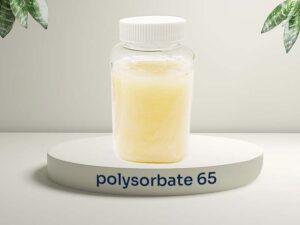

Introduction to Polysorbate 65 (Tween 65)
Polissorbato 65, scientifically identified as polyoxyethylene (20) sorbitan tristearate, is a high-performance, non-ionic surfactant and emulsifier widely utilized in the global food processing industry. As a member of the polysorbate family, it is synthesized through the ethoxylation of sorbitan tristearate, resulting in a complex mixture of polyoxyethylene ethers of mixed stearic acid esters of sorbitol anhydrides.
Unlike its counterparts (Polysorbate 60 or 80), Polysorbate 65 is characterized by its tristearate structure, which provides unique HLB (Hydrophilic-Lipophilic Balance) values and physical properties suited for stabilizing complex fat-water systems in frozen desserts, bakery products, and dairy alternatives.
Technical Specifications and Chemical Composition
For industrial-grade procurement and formulation, Polysorbate 65 must adhere to strict chemical parameters to ensure functionality and safety. The manufacturing process involves reacting stearic acid (often associated with palmitic acid) with sorbitol to achieve a specific acid number, followed by a reaction with ethylene oxide.
Core Chemical Parameters
The following table outlines the industrial standards required for food-grade Polysorbate 65:
| Parâmetro | Specification Limit |
| Saponification Number | 88 – 98 |
| Acid Number | 0 – 2 |
| Hydroxyl Number | 44 – 60 |
| Oxyethylene Content | 46% – 50% |
| Maximum Water Content | 0.2% |
| Maximum Acid Number (Pre-reaction) | 15 |
Industrial Food Application Scenarios
Polysorbate 65 serves as a critical functional ingredient across several food categories. Its primary role is to manage the interface between oil and water, preventing separation and improving texture.
1. Frozen Dairy and Non-Standardized Desserts
In the production of ice cream, frozen custard, ice milk, and fruit sherbets, Polysorbate 65 is indispensable. It functions as a powerful aerating agent and foam stabilizer.
- Functionality: It aids in the controlled “destabilization” of the fat emulsion during freezing, which promotes the formation of a stable air cell structure.
- Result: This leads to a smoother texture, increased resistance to “heat shock” (melting and refreezing), and a slower melt-down rate.
2. Commercial Bakery and Cake Mixes
Polysorbate 65 is a staple in the high-volume baking industry, particularly in cakes and prepared cake mixes.
- Functionality: It acts as a dough conditioner and crumb softener. By interacting with flour proteins and starches, it ensures even fat distribution within the batter.
- Result: Enhances volume, provides a finer grain (crumb structure), and significantly extends shelf life by delaying starch retrogradation (staling).
3. Whipped Edible Oil Toppings
For aerosol or whipped cream substitutes (whipped toppings), Polysorbate 65 ensures the integrity of the foam.
- Functionality: It strengthens the film surrounding the air bubbles, preventing the topping from collapsing or weeping (syneresis).
- Result: Improved “stand-up” properties and a creamy mouthfeel that mimics high-fat dairy cream.
4. Coffee Whiteners and Dairy Substitutes
In solid-state vegetable fat-water emulsions (coffee creamers and milk substitutes), Polysorbate 65 provides essential emulsification.
- Functionality: It prevents “feathering” or oil separation when the creamer is added to acidic, hot liquids like coffee.
- Result: A uniform, opaque dispersion that provides the whitening power and mouthfeel expected by consumers.
5. Cake Icings and Fillings
Maintaining the stability of high-sugar, high-fat systems like icings and fillings requires robust emulsification.
- Functionality: Polysorbate 65 prevents moisture migration and oil bleed-out in decorative icings.
- Result: Ensures icings remain pliable and retain their shape/gloss over time without becoming gritty or separating.
Regulatory Compliance and Usage Limits (FDA 21 CFR 172.838)
To maintain “Generally Recognized as Safe” (GRAS) status and comply with FDA regulations, food manufacturers must strictly adhere to the following concentration limits. These limits are calculated based on the weight of the finished product or dry weight as specified.
Summary of Usage Limitations
- Frozen Desserts (Ice Cream/Sherbet):
- Maximum: 0.1% of the finished product.
- Observação: This limit applies whether Polysorbate 65 is used alone or in combination with Polysorbate 80.
- Cakes and Cake Mixes:
- Alone: Máximo 0.32% on a dry-weight basis.
- In Combination: Total emulsifier blend (including Sorbitan Monostearate and Polysorbate 60) must not exceed 0.66%.
- Whipped Edible Oil Toppings:
- Maximum: 0.4% by weight of the finished topping.
- Observação: Total applies to the sum of all polysorbates and sorbitan monostearate used.
- Coffee Creamers (Vegetable Fat Emulsions):
- Maximum: 0.4% by weight of the finished emulsion.
- Cake Icings and Fillings:
- Alone: Máximo 0.32% of the finished weight.
- In Combination: Total emulsifier blend (including Sorbitan Monostearate and Polysorbate 60) must not exceed 1.0%.
Labeling and Safety Requirements
Per § 172.838, the labeling of Polysorbate 65 and any intermediate premixes must be transparent to ensure downstream compliance. The label must include:
- The specific name of the additive: Polissorbato 65.
- The concentration or strength of the additive within any premix.
- Adequate directions for use to ensure the final food product does not exceed the legal safety thresholds outlined above.
Conclusão
Polysorbate 65 is a versatile, industrial-grade tool for food engineers looking to optimize texture, stability, and shelf-life. By understanding both its chemical capabilities and its strict regulatory boundaries, manufacturers can create high-quality, compliant products that meet modern consumer standards for mouthfeel and consistency.