
In the global chemical trade, certifications are more than just symbols on a label—they are essential passports for high-value markets. For procurement professionals and decision-makers sourcing Сорбитановые эфиры (испанский) и Полисорбаты (Твин), understanding the technicalities of Кошерный и Халяль compliance is vital for risk mitigation and market expansion.
1. What is Kosher Certification?
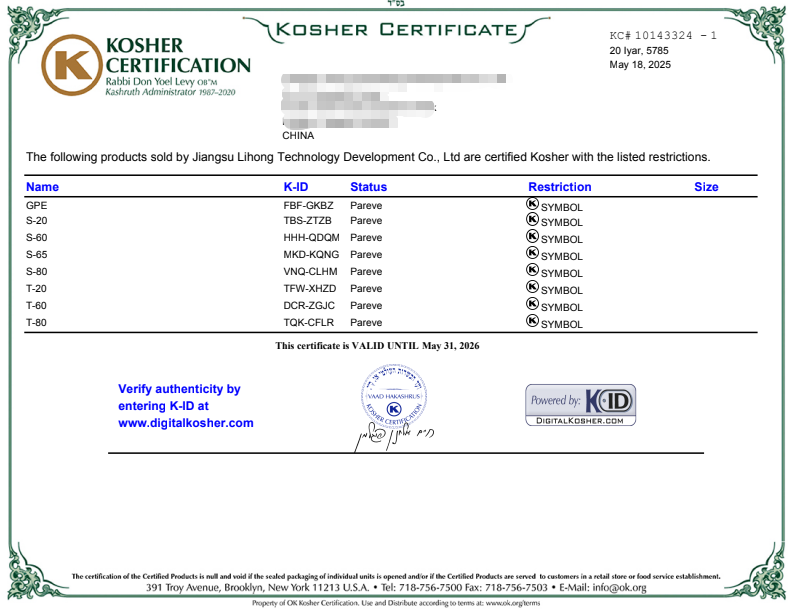
Кошерный refers to products and manufacturing processes that comply with Jewish dietary laws (Kashrut).
- Application Scenarios: Essential for the North American and European food, pharmaceutical, and personal care sectors. It is often used by non-religious consumers as a benchmark for “clean-label” purity.
- Compliance Requirements: Source Verification: Strict prohibition of ingredients derived from non-kosher animals or certain insects.
- Equipment Integrity: Production lines must undergo a “Kosherization” process (specialized deep cleaning) to prevent cross-contamination.
- Classification: Most emulsifiers like polysorbate 80 kosher must be certified as Pareve (neutral), containing neither meat nor dairy derivatives.
2. What is Halal Certification?
Халяль means “permissible” under Islamic law. It is a mandatory requirement for entering major markets in Southeast Asia (Indonesia, Malaysia), the Middle East, and Africa.
- Application Scenarios: Critical for food additives, cosmetics, and industrial processing aids used in regions with significant Muslim populations.
- Compliance Requirements:
- Ingredient Bans: Absolutely no pork, porcine by-products, alcohol, or animals not slaughtered according to specific religious protocols.
- Прослеживаемость: The entire supply chain—from raw material harvesting to warehousing—must maintain “Halal Integrity” to prevent contact with Najis (unclean) substances.
- Safety Standards: Halal also encompasses the concept of Tayyib (wholesomeness), ensuring the product is healthy and non-toxic.
3. Comparison of Kosher and Halal Certification Requirements for Chemical Suppliers
For manufacturers of surfactants like Span and Tween, maintaining both certifications is a strategic advantage. While they share the goal of “purity,” their technical audit focus areas differ.
| Особенность | Kosher (Jewish Dietary Law) | Halal (Islamic Dietary Law) |
| Core Philosophy | Compliance with “Kashrut” (fit/proper) laws. | Compliance with “Sharia” (permissible) laws. |
| Prohibited Sources | Specific animals (pig, shellfish), insects, and non-kosher slaughter. | Pig (porcine), alcohol (ethanol), and animals not slaughtered per rite. |
| Alcohol Usage | Generally permitted in industrial processing if evaporated or denatured. | Strictly monitored; residual ethanol usually must be <0.5 or 0.1\% depending on the body. |
| Plant-Derived Status | Viewed as “Pareve” (neutral); highly desirable for chemical emulsifiers. | Viewed as “Tayyib” (pure); preferred for ease of certification. |
| Equipment/Lines | Requires “Kosherization” (boiling water/heat) if shared with non-kosher runs. | Requires ritual cleaning (often “Sertu”) if cross-contaminated with porcine. |
| On-Site Audits | Frequent, often unannounced inspections by a Rabbi or Mashgiach. | Annual or biennial audits focusing on the “Halal Assurance System” (HAS). |
| Документация | Focuses on the “Letter of Certification” (LOC) for every raw ingredient. | Focuses on the “Halal Certificate” and full traceability of the supply chain. |
| Biotechnology | Strict rules on enzymes and fermentation media (must be kosher). | Focuses on the origin of the “starter culture” and growth media. |
Strategic Implications for Polysorbate 80 Suppliers
When positioning products like Полисорбат 80, suppliers must address specific technical concerns for both certifying bodies:
- Fatty Acid Origin: Both certifications require proof that the oleic acid used in Polysorbate 80 is 100% vegetable-based. Animal-derived fatty acids are the primary cause of certification failure.
- Is Polysorbate 80 Vegan? While “Vegan” is a lifestyle choice rather than a religious one, a Vegan claim simplifies both Kosher and Halal audits because it pre-emptively excludes animal-derived cross-contamination risks.
- Preservative Confusion: Addressing the question “is polysorbate 80 a preservative?” is critical during audits. Because it is an emulsifier and not a polysorbate 80 preservative, auditors look at how it interacts with other ingredients in the final “Halal/Kosher matrix” to ensure no forbidden chemical reactions occur.
4. Span & Tween: Ensuring Global Compliance for Your Formulations
As a professional manufacturer of Sorbitan Esters (Span) and Polysorbates (Tween), we prioritize transparency to assist procurement teams in their technical due diligence.
Addressing Common Procurement Queries
- Is polysorbate 80 kosher? Yes. Our polysorbate 80 kosher grade is certified by recognized rabbinical authorities, ensuring it meets the strictest neutral (Pareve) standards.
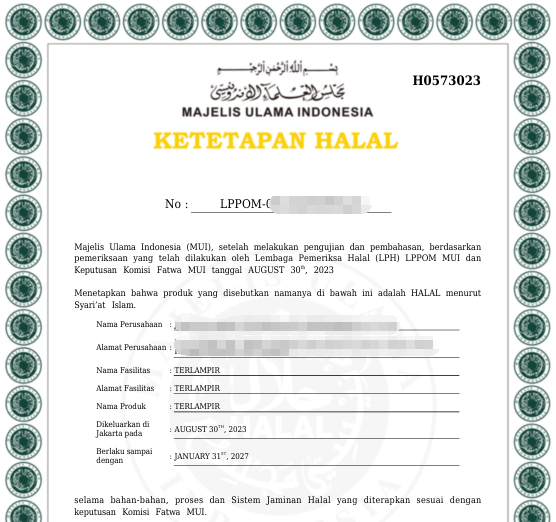
- Is polysorbate 80 halal? Yes. For those asking “is polysorbate 80 halal?“, we provide full certification proving that no alcohol or forbidden animal derivatives are used in the synthesis process.
- Is polysorbate 80 vegan? Yes. Is polysorbate 80 vegan? Absolutely. Our product is derived entirely from plant-based fatty acids, making it suitable for vegan and vegetarian lifestyles.
- What is polysorbate 80 derived from? What is polysorbate 80 derived from? Our Tween 80 is synthesized from plant-derived oleic acid and sorbitol, ensuring a sustainable and ethically sourced raw material profile.
Health and Functional Clarifications
- Safety Record: Regarding concerns about whether polysorbate 80 is harmful, it is approved for use by the FDA and EFSA. It is considered a polysorbate 80 healthy and safe additive when used within standard regulatory limits.
- Functional Role: A common misconception in procurement is: “is polysorbate 80 a preservative?” Technically, it is not a polysorbate 80 preservative. It functions as a high-performance emulsifier and solubilizer. While it stabilizes formulations, it does not possess antimicrobial properties.
Заключение
Partnering with a dual-certified manufacturer allows you to streamline your supply chain and reduce regulatory friction. Our Span and Tween series are produced under rigorous quality controls, ensuring they satisfy both religious requirements and international safety standards.