
The Verdict: Is Polysorbate 20 Natural or Synthetic?
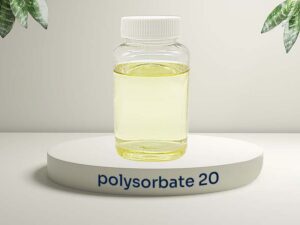
For R&D managers and formulation engineers navigating the clean label landscape, the question is polysorbate 20 natural requires a nuanced, chemical perspective. The definitive answer is thatPolysorbate 20 (Tween 20) is classified as a semi-synthetic ingredient. It is not found in nature in its final form, nor can it be extracted directly from a plant source without chemical modification.
While the backbone of the molecule is derived from natural feedstocks, the processing required to create its high-performance solubilizing properties involves synthetic chemical reactions. Understanding whether is polysorbate 20 natural or synthetic is critical for regulatory compliance, particularly when formulating for standards like COSMOS, ECOCERT, or specific “All-Natural” retailer mandates.
Understanding Semi-Synthetic Ingredients
A semi-synthetic ingredient acts as a bridge between nature and laboratory science. In the case of Polysorbate 20, the molecule begins with natural precursors but undergoes ethoxylation to increase its hydrophilicity. This distinction is vital for procurement officers sourcing raw materials for “naturally derived” claims versus strict “100% natural” claims.
Formulator’s Note: While Polysorbate 20 is not considered natural under ISO 16128 standards (due to the ethoxylation moiety), it is widely accepted in safe, effective, and naturally-derived formulations where performance and stability are paramount.
How Is Polysorbate 20 Made?
To fully understand the classification, we must examine how is polysorbate 20 made. The synthesis involves a multi-step process that combines bio-based chemistry with petrochemical processing. At foodemul.com, we ensure rigorous control over every step of this synthesis to maintain high purity and batch-to-batch consistency.
Sorbitan Esters from Natural Sources
The foundation of Polysorbate 20 lies in sorbitan esters natural sources. The process begins with two primary natural raw materials:
- Sorbitol: A sugar alcohol derived from corn, wheat, or tapioca. Through dehydration, sorbitol forms Sorbitan.
- Lauric Acid: A saturated fatty acid extracted from coconut oil or palm kernel oil.
These two components undergo esterification to create Sorbitan Monolaurate (Span 20). At this stage, the ingredient is 100% bio-based and lipophilic.
The Ethoxylation Process Explained
The transformation from Span 20 to Tween 20 occurs through ethoxylation. Ethylene oxide is reacted with the Sorbitan Monolaurate. Specifically, approximately 20 moles of ethylene oxide are polymerized onto the free hydroxyl groups of the sorbitan ring.
This reaction converts the lipophilic Sorbitan Monolaurate into a hydrophilic Polysorbate 20 with an HLB (Hydrophile-Lipophile Balance) of approximately 16.7. It is this ethoxylation step that renders the ingredient synthetic in the eyes of organic certification bodies, despite its natural origins.
Is Polysorbate 20 Vegan and Cruelty-Free?
For brands targeting the ethical consumer market, determining if polysorbate 20 vegan status applies is essential. Chemically, Polysorbate 20 can be produced using fatty acids from either animal fats (tallow) or vegetable oils.
However, in modern industrial applications—and specifically regarding the portfolio at foodemul.com—Polysorbate 20 is almost exclusively plant-derived. We utilize Lauric Acid sourced from RSPO-certified palm oil or coconut oil. Therefore, our Polysorbate 20 is suitable for vegan and vegetarian formulations and does not involve animal testing.
Procurement Tip: Always request a “Certificate of Origin” or “Vegan Statement” from your supplier to confirm the fatty acid source is strictly vegetable-based, as pharmaceutical grades can occasionally differ.
Synthetic vs. Natural Emulsifiers: Performance Comparison
When evaluating synthetic vs natural emulsifiers, formulators often face a trade-off between the superior solubilizing power of ethoxylated surfactants and the marketing appeal of green chemistry. Polysorbate 20 is an industry standard because it creates crystal-clear micro-emulsions with exceptional stability.
Below is a technical comparison of Polysorbate 20 against common natural alternatives:
| Feature | Polysorbate 20 (Tween 20) | Polyglyceryl-10 Laurate | Caprylyl/Capryl Glucoside |
|---|---|---|---|
| Origin | Semi-Synthetic (Ethoxylated) | 100% Natural Origin | 100% Natural Origin |
| HLB Value | ~16.7 | ~10.5 – 12.0 | ~11.0 – 12.0 |
| Solubilizing Power | Excellent (High clarity) | Good (Moderate clarity) | Moderate (Often hazy) |
| Sensory Profile | Low tack, smooth feel | Can be tacky/sticky | Can feel soapy/dry |
| Stability | High pH & Temp stability | Moderate | High pH stability |
Top Polysorbate 20 Natural Alternatives
While Polysorbate 20 remains the gold standard for solubilizing fragrances and essential oils into water, market demand often drives the search for a polysorbate 20 natural alternative. Replacing Tween 20 requires careful recalculation of the HLB system and often necessitates a blend of solubilizers to achieve similar transparency.
Solubilizers for Essential Oils
If you are seeking natural alternatives to tween 20 specifically for solubilizing essential oils in toners, mists, or beverages, consider the following:
- Polyglyceryl-10 Laurate: This is widely regarded as the closest functional replacement. It is non-ethoxylated and derived from glycerol and lauric acid. It provides decent clarity but may require higher usage rates (3:1 to 5:1 solubilizer to oil ratio) compared to Polysorbate 20.
- Heptyl Glucoside: A potent bio-based solubilizer that is effective at solubilizing lipophilic compounds in transparent formulations.
Natural Surfactants to Replace Tween 20
For cleansing applications where Polysorbate 20 is used as a mild co-surfactant or viscosity modifier, natural alternatives to tween 20 include alkyl polyglucosides (APGs) like Coco Glucoside or Decyl Glucoside. While these are 100% natural, they foam more significantly than Polysorbate 20 and lack its unique ability to reduce irritation in anionic systems.
Ultimately, the choice depends on the application. For high-performance industrial, cosmetic, or food applications where clarity and stability are non-negotiable, Polysorbate 20 remains the superior choice. For strict natural compliance, formulators must be prepared to adjust viscosity and accept slight turbidity.
At foodemul.com, we support your formulation journey regardless of the path you choose. Whether you require high-purity Polysorbate 20 or guidance on Sorbitan Esters, our technical team is ready to assist with regulatory documentation and supply chain security.