Polysorbate 65 – Tristearate Stabilizer (E436)

Home / Products / Polysorbates / Polysorbate 65 – Tri...

Overview

  • Synonyms
    Polysorbate 65, Polyoxyethylene (20) Sorbitan Tristearate, Polyoxyethylene Sorbitan Tristearate, POE (20) Sorbitan Tristearate, INS 436, E436
  • Chemical Nature
    Nonionic surfactant consisting primarily of polyoxyethylene derivatives of sorbitol and sorbitol anhydrides esterified with stearic acid. The average ethoxylation level is approximately 20 moles of ethylene oxide.
  • Appearance & Specs
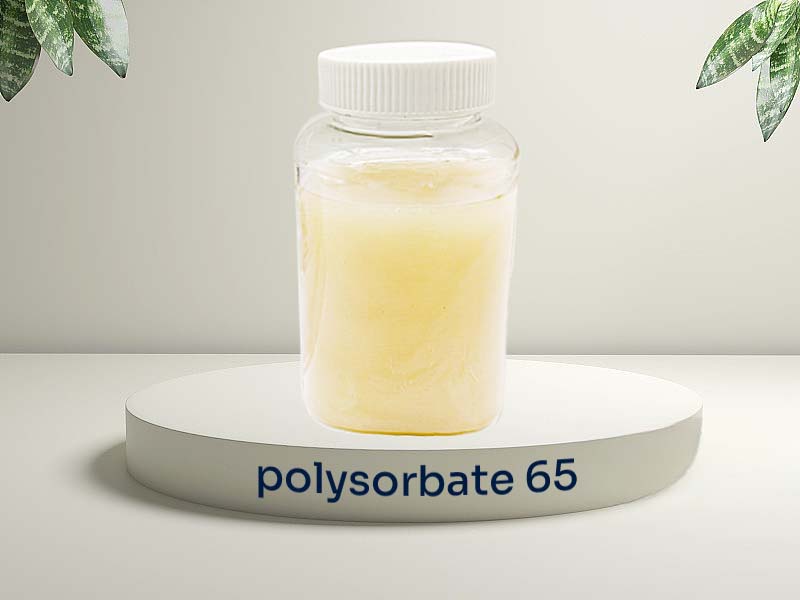
    Tan-coloured waxy solid at 25°C  |  Typical HLB: 10.5
  • ★ Primary Application (Frozen Desserts)
    Ice Cream Structure & Melting Properties. Supports controlled fat destabilization during freezing and aeration, contributing to the development of the fat network, desirable texture and melting characteristics in suitable frozen dessert formulations.
  • Additional Food Applications
    Used in selected non-dairy whipped toppings, cakes, bakery mixes and confectionery formulations, subject to applicable food additive regulations.
  • Key Functions
    Food Emulsifier, Interfacial Modifier & Fat Structure Control in Selected Aerated Food Systems.
KOSHER CERTIFICATION
halal certification
HALAL CERTIFICATION
China Quality Mark Certification
Quality Certified
DCI certification
ISO 9001
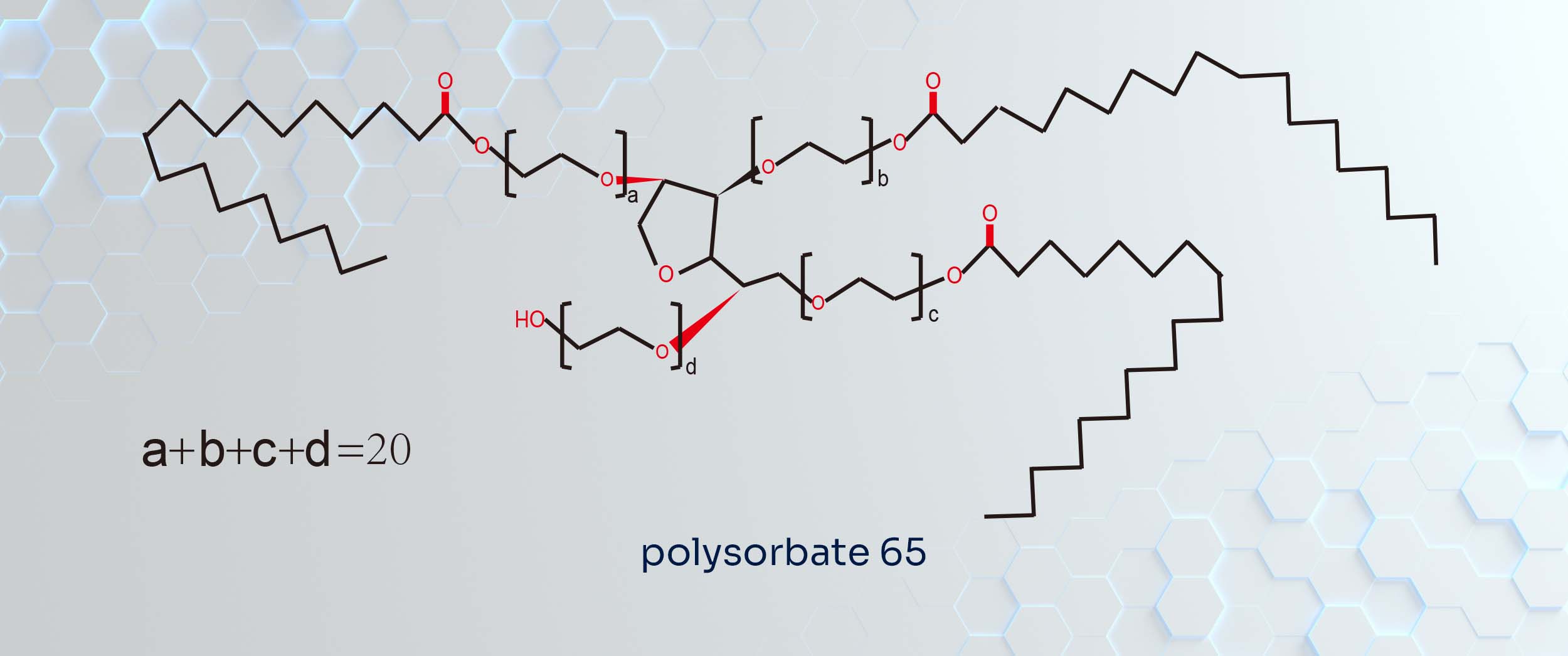
Molecular structure diagram of Polysorbate 65 with hydrophilic and hydrophobic moiety breakdown

Molecular Structure

  • Structural Components
    Hydrophilic Segment: Polyoxyethylene chains containing approximately 20 ethylene oxide units in total, on average, per sorbitol-derived molecule, contributing to water affinity and interfacial activity.
    Hydrophobic Moiety: Predominantly stearic acid-derived ester groups, represented by three fatty acid residues in the idealized tristearate structure, providing affinity for the oil phase.
    Backbone: Sorbitol-derived and anhydrosorbitol-derived structures connecting the hydrophilic polyoxyethylene chains and lipophilic fatty acid ester groups.
  • ★ Mechanism of Action
    Interfacial Activity & Emulsification. The amphiphilic structure enables Polysorbate 65 to adsorb at the oil–water interface, modifying interfacial tension and supporting emulsification. Its performance depends on the oil phase, other formulation ingredients and processing conditions.

Structural Note: Polysorbate 65 is a commercial mixture of related ethoxylated fatty acid esters. Molecular diagrams represent an idealized structure rather than the exact composition of every molecule.

Specifications

  • Physical Characteristics
    Polysorbate 65 (E436) is a nonionic food emulsifier, typically appearing as a tan-coloured waxy solid at 25°C. It is dispersible in water and exhibits interfacial activity in compatible oil-water systems.
  • Typical Technical Properties
    The following values are based on published food additive specifications and typical technical characteristics. Actual product specifications and batch results should be confirmed against the supplier’s Technical Data Sheet (TDS) and Certificate of Analysis (COA).
Test IndicatorUnitMin ValueMax Value
HLB Value—10.5
Saponification ValuemgKOH/g8898
Hydroxyl ValuemgKOH/g4460
Acid ValuemgKOH/g-2.0
Moisture Content%-3

Applications

  • Ice Cream & Frozen Desserts
    Polysorbate 65 supports controlled fat destabilization during freezing and aeration. It may contribute to the development of the fat network responsible for desirable texture, air-cell structure and melting characteristics in suitable ice cream formulations.
  • Non-Dairy Whipped Toppings
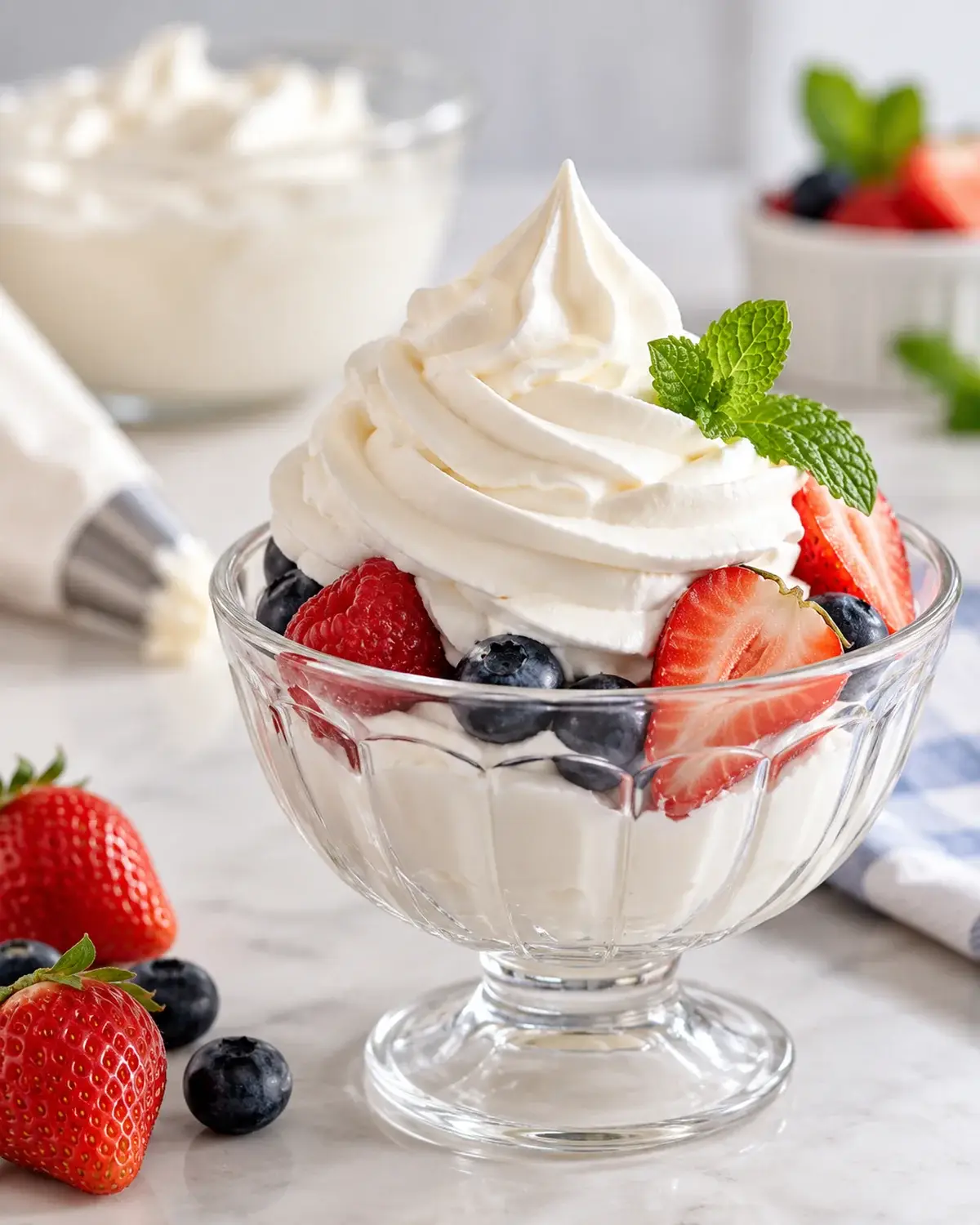
    In compatible vegetable-fat-based whipped topping systems, Polysorbate 65 may function as part of an emulsifier blend to support aeration, controlled fat aggregation and the development of the desired whipped structure.
  • Cakes & Bakery Mixes
    Polysorbate 65 may be used in permitted cake and bakery formulations to support fat dispersion and emulsification during mixing. Effects on batter aeration, cake volume and crumb texture depend on the complete recipe and processing conditions.
  • Confectionery Applications
    Polysorbate 65 may be evaluated for selected confectionery coatings and fat-based formulations where interfacial activity and ingredient compatibility are required, subject to applicable regulatory permissions.
  • Functional Performance
    As a nonionic surfactant, Polysorbate 65 modifies interfacial properties in compatible oil-water systems. Its effects on emulsion structure, aeration and product texture depend on formulation composition, dosage and processing conditions.
  • ★ Regulatory & Formulation Considerations
    Application-Specific Evaluation. Permitted food categories and maximum use levels vary by country or region. Formulators should verify local food additive regulations and conduct application trials to establish appropriate dosage, processing conditions and finished-product performance.

Frozen Dessert Formulation Support

Can be evaluated in permitted frozen dessert formulations to support emulsifier performance and product texture, depending on recipe and processing conditions.

Fat Crystallization Control

May influence fat crystallization and structural behavior in compatible fat-containing systems, subject to formulation testing.

Intermediate HLB (10.5)

Provides an intermediate hydrophilic–lipophilic balance for selected emulsion systems and emulsifier blends.

Flexible Emulsifier Blending

Can be combined with compatible surfactants and emulsifiers to adjust interfacial behavior in selected formulations.

Vanilla ice cream scoop topped with a cherry in a glass dessert bowl
Plant-based whipped cream dessert with fresh strawberries, blueberries and mint
Freshly baked golden sponge cake cooling on a wire rack in a commercial bakery

Storage & Package

  • Storage Conditions
    Store Polysorbate 65 (E436 / Tween 65) in a cool, dry, and well-ventilated area, away from direct sunlight, moisture, excessive heat, and incompatible materials. Keep containers tightly sealed to prevent contamination. Avoid prolonged exposure to elevated temperatures that may cause softening or changes in physical appearance. Follow the supplier’s recommended storage conditions and shelf life.
  • Transportation
    Transport in securely sealed, chemical-compatible packaging to prevent contamination, package damage, or product loss. Protect from excessive heat and unsuitable handling conditions. Verify shipping classification against the current Safety Data Sheet (SDS) and applicable transport regulations.
  • Standard Packaging
    Polysorbate 65 (E436 / Tween 65) is supplied in securely sealed, chemical-compatible packaging suitable for waxy or semi-solid materials. Depending on product grade and supplier availability, packaging formats may include lined drums, suitable pails, or other approved containers.
    Please confirm the available packaging formats and net weights before ordering.
  • ★ Packaging & Shipping Information
    Confirm Before Ordering. Packaging type, net weight, storage recommendations, and shipping requirements may vary by supplier and product grade. Contact us for current packaging options, Technical Data Sheet (TDS), Safety Data Sheet (SDS), and shipment details.
25 Kg /drum
200kg/drum
1000kg IBC

Food-Grade Sorbitan and Polysorbate Solutions

Source food-grade sorbitan fatty acid esters and polyoxyethylene sorbitan fatty acid esters for bakery, dairy, beverage, confectionery, and other qualified food applications. Share the required grade or E-number, application, estimated quantity, destination port, and mandatory documents for an accurate quotation.

Request a Quote

From the same category