
Introduction
One of the most frustrating moments for a formulator is creating a room spray or facial toner, only to have it turn into a cloudy, milky mess.
The problem? Oil and water don’t mix.
The solution? Polysorbate 20.
But simply adding it isn’t enough. The secret to a crystal-clear product lies in using the correct Ratio. Use too little, and the oil separates. Use too much, and your product becomes sticky and foam-heavy.
In this guide, we reveal the industry standard “Golden Ratios” for solubilizing essential oils and the critical mixing order to ensure clarity.
What Is Polysorbate 20 Used For?
Before we calculate ratios, it is important to understand the role this ingredient plays.
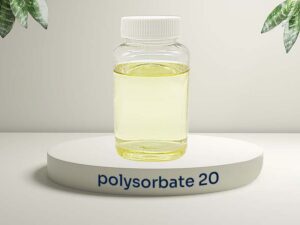
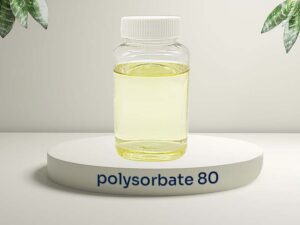
Polysorbate 20 (often sold as Tween 20) is a non-ionic surfactant and solubilizer. Unlike its cousin Polysorbate 80 (which handles heavy vegetable oils), Polysorbate 20 is lighter, clearer, and specifically designed for fragrance oils and essential oils.
It is the standard ingredient used to:
- Create Clear Sprays: Disperse essential oils in water for linen sprays and room mists.
- Formulate Toners: Incorporate soothing oils (like Chamomile) into water-based facial products.
- Prevent Separation: Ensure fragrance oils mix evenly into shampoos and body washes without floating to the top.
The Golden Ratios: How Much Should You Use?
There is no single “magic number” because every essential oil has a different chemical density. However, industry standards provide a reliable starting point.
The Rule of Thumb:
Start with a 1:1 Ratio (by weight).
1 gram of Essential Oil : 1 gram of Polysorbate 20.
Starting Guidelines by Oil Type:
| Oil Type | Examples | Recommended Starting Ratio (Oil : PS20)* |
|---|---|---|
| Light / Citrus Oils | Lemon, Grapefruit, Lavender, Tea Tree | 1 : 1 |
| Medium Weight Oils | Peppermint, Geranium, Eucalyptus | 1 : 2 |
| Heavy / Resinous Oils | Patchouli, Sandalwood, Vetiver, Vanilla | 1 : 3 to 1 : 5 |
| Synthetic Fragrance Oils | Complex perfume blends | 1 : 3 (Variable) |
*Note: These ratios are general guidelines. We always recommend performing a small “bench test” (e.g., 10g batch) to verify clarity before full-scale production.
Step-by-Step Mixing Guide (Crucial)
Most beginners fail because they mix the ingredients in the wrong order. Polysorbate 20 is a solubilizer—it needs to “coat” the oil molecules before water touches them.
The “Pre-Mix” Method:
- Phase A (The Solubilization Phase):In a clean beaker, weigh your Essential Oil and Polysorbate 20.
- Mix Thoroughly:Stir them together vigorously. The mixture should turn into a thick, uniform liquid. Let it sit for 5 minutes to ensure full interaction.
- Checkpoint: If this mixture looks cloudy before adding water, add slightly more Polysorbate 20 until it clears.
- Phase B (The Water Phase):Slowly pour your water (or hydrosol) into the Phase A beaker while stirring gently.
- Final Result:The water should remain clear. If it turns milky immediately, your ratio was too low. (See Troubleshooting below).
Troubleshooting: Why is it Cloudy?
If your spray looks like milk, the “HLB balance” is off.
- Not enough Polysorbate: The micelles couldn’t trap all the oil.
- Fix: Increase the ratio (e.g., go from 1:1 to 1:2) in your next test batch.
- Wrong Polysorbate: Are you using Polysorbate 80?
- Fix: Switch to Polysorbate 20. PS80 is yellowish and meant for fats/vegetable oils. PS20 is for fragrances.
- Water Temperature:
- Fix: Sometimes using lukewarm water (30°C) helps the emulsion form faster and clearer.
Ingredient Quality Matters
When sourcing Polysorbate 20 ingredients, purity is key, especially for leave-on products like facial toners. Low-quality industrial grades may contain residual impurities that can cause skin irritation.
At FoodEmul, we supply:
- High-Purity Polysorbate 20: Optimized for cosmetic clarity and safety.
- Vegetable-Derived: Sourced from Lauric Acid (Coconut/Palm) and Corn Sorbitol.
- Microplastic-Free: Fully water-soluble and REACH compliant.
> Request a Quote for High-Purity Polysorbate 20
Disclaimer
The ratios provided in this article are based on general cosmetic industry standards. Essential oils vary significantly in chemical composition by brand and harvest. Always conduct stability testing in small batches to determine the exact ratio for your specific fragrance blend.