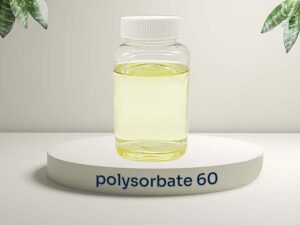
Polysorbate 60 (Tween 60) is one of the most widely researched emulsifiers in the global market. However, with the increasing demand for “clean label” products, many manufacturers and consumers are asking: Is Polysorbate 60 safe?
As a B2B supplier or formulator, understanding the toxicological profile and regulatory limits of E435 is essential for market entry and consumer trust.
1. Global Regulatory Status (FDA & EFSA)
Polysorbate 60 is approved for use in food, cosmetics, and pharmaceuticals by almost every major regulatory body in the world.
- FDA (USA): Classified as GRAS (Generally Recognized as Safe) under 21 CFR 172.836. It is permitted for use in specific food categories within defined limits.
- EFSA (Europe): Assigned the food additive code E435. It has undergone multiple safety re-evaluations, with the most recent confirming its safety for the general population.
- JECFA (Joint FAO/WHO Committee): Established an Acceptable Daily Intake (ADI) of 0–25 mg per kg of body weight.
2. Side Effects and Toxicological Profile
In its concentrated form, Polysorbate 60 can be a mild irritant, but in final formulations, it is considered non-toxic.
- Skin Sensitivity: In cosmetics, it is classified as non-irritating and non-sensitizing. It is even used in products for sensitive skin.
- Digestion: In food, it is broken down into sorbitol and stearic acid, both of which are naturally metabolized by the human body.
- Carcinogenicity: Extensive studies have shown no evidence that Polysorbate 60 is carcinogenic or mutagenic.
Ultimate Guide to Polysorbate 60
New to Tween 60? Explore our comprehensive pillar guide covering properties, technical specifications, and global industry applications of E435.
Read Full Pillar Guide →3. Common Concerns: Ethylene Oxide and 1,4-Dioxane
A common concern in the industry is the presence of trace impurities from the manufacturing process (ethoxylation).
- Purity Standards: High-quality, food-grade Polysorbate 60 must undergo vacuum stripping to remove residual Ethylene Oxide and 1,4-Dioxane.
- Sourcing Tip: When purchasing, always request a COA (Certificate of Analysis) that confirms these impurities are below the safety thresholds (usually <1 ppm or <10 ppm depending on the region).
4. Application Safety Limits
To remain compliant, formulators should adhere to maximum usage levels. Here are some typical safety limits:
| Application | Typical Safety Limit (Max) |
| Whipped Toppings | 0.4% |
| Salad Dressings | 0.3% |
| Cakes & Mixes | 0.46% |
| Cosmetic Emulsions | No strict limit (self-regulated by efficacy) |
5. Is It Vegan and Halal?
- Vegan: Most Polysorbate 60 is derived from vegetable-based stearic acid (like palm oil), making it vegan-friendly. However, some industrial grades can be animal-derived, so always check with your supplier.
- Halal & Kosher: As long as the fatty acid source is plant-based and the facility is certified, Tween 60 is fully compatible with Halal and Kosher requirements.
Conclusion: The Verdict
Yes, Polysorbate 60 is safe for its intended uses in the food and personal care industries. Its long history of use and rigorous testing by international agencies make it a reliable choice for stabilizing complex emulsions.
For more technical details on how to use this ingredient safely in your recipe, visit our Polysorbate 60 Formulation Guide.