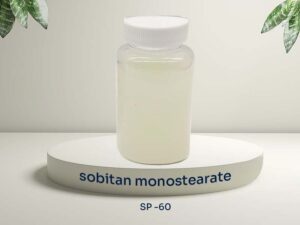

Polysorbate 60, widely recognized by its commercial name Tween 60 and European food additive number E435, is a high-performance synthetic non-ionic surfactant. It is derived from ethoxylated sorbitan esterified with stearic acid.
Due to its unique molecular structure, it acts as a powerful O/W (Oil-in-Water) emulsifier, solubilizer, and stabilizer. In the B2B sector, it is a critical ingredient for achieving consistent texture in food products and smooth consistency in cosmetic formulations.
1. What is Polysorbate 60 (E435)?
Polysorbate 60 is a polyoxyethylene sorbitan monostearate. Unlike Polysorbate 20 or 80, the “60” designation refers to the stearic acid part of the molecule, which gives it specific lipophilic properties.
As a food-grade additive (E435), it must meet strict purity standards. It is often preferred over other emulsifiers when a stable, thick, and creamy texture is required in high-fat or aerated systems. If you are comparing different surfactants for your formula, you might wonder about the specific differences in Polysorbate 60 vs. 80 to decide which is best for your product’s stability.
2. Technical Specifications & Chemical Properties
Understanding the technical boundaries of Polysorbate 60 is essential for R&D formulation and quality control.
- HLB Value (Hydrophilic-Lipophilic Balance): 14.9. Its high HLB makes it ideal for stabilizing oil-in-water emulsions.
- Chemical Formula: C64H126O26 (Approximate, based on the degree of polymerization).
- Physical State: A lemon-to-orange colored oily liquid or semi-solid gel at room temperature.
- Solubility: Highly soluble in water, ethanol, and ethyl acetate; insoluble in mineral and vegetable oils.
- Saponification Value: 45–55 mg KOH/g.
- Hydroxyl Value: 81–96 mg KOH/g.
Ultimate Guide to Polysorbate 60
New to Tween 60? Explore our comprehensive pillar guide covering properties, technical specifications, and global industry applications of E435.
Read Full Pillar Guide →3. How It Works: The Science of Emulsification
Polysorbate 60 functions by reducing the interfacial tension between oil and water phases.
The “Stearic Acid” tail provides excellent stability in aeration (such as in whipped cream), while the “Polyoxyethylene” head ensures strong water-binding capacity. This synergy prevents phase separation (creaming) and extends the shelf life of processed products by maintaining a homogenous mixture. For a deep dive into mixing temperatures and step-by-step procedures, please refer to our detailed Polysorbate 60 Formulation Guide.
4. Key Applications Across Industries
Food Industry (Additive E435)
- Whipped Toppings: It prevents water drainage and maintains the “fluffiness” of whipped creams.
- Bakery Products: Acts as a dough conditioner, improving the volume and softening the crumb structure of bread and cakes.
- Salad Dressings: Ensures oil and vinegar stay blended for longer periods.
Cosmetics & Personal Care
- Lotions & Creams: Used to create smooth, non-greasy O/W emulsions.
- Hair Care: Acts as a solubilizer for fragrance oils and active ingredients in shampoos and conditioners.
Pharmaceuticals
- It serves as an effective solubilizer for fat-soluble vitamins and active pharmaceutical ingredients (APIs) in oral and topical delivery systems.
If you are looking for clean-label or plant-based alternatives for these applications, explore our guide on Polysorbate 60 Substitutes.
5. Safety, Regulatory Status & Certifications
Is Polysorbate 60 safe for consumption and topical use?
According to the FDA and EFSA, Polysorbate 60 is considered GRAS (Generally Recognized as Safe).
- ADI (Acceptable Daily Intake): Up to 25 mg/kg body weight.
- Purity: It is free from GMOs and typically derived from vegetable-based stearic acid.
- Full Report: You can find the complete toxicological data and compliance standards in our article: Is Polysorbate 60 Safe?.
6. Sourcing Polysorbate 60 for B2B
When sourcing Tween 60, it is vital to check the COA (Certificate of Analysis) for acid value and moisture content. High-quality Polysorbate 60 should have a consistent pale color and minimal odor to avoid impacting the final product’s sensory profile. Always ensure your supplier provides Kosher, Halal, and ISO 22000 certifications for global compliance.