Category: Comparisons
Insights on food emulsifiers—applications, functions, and benefits to improve stability, texture, and quality across industries.
Choosing the right emulsifier requires understanding not just what each product does, but how they differ under real formulation conditions. The Comparisons category provides head-to-head technical analyses that help formulators, buyers, and quality managers make evidence-based decisions between competing emulsifier options—saving weeks of trial-and-error in the lab.
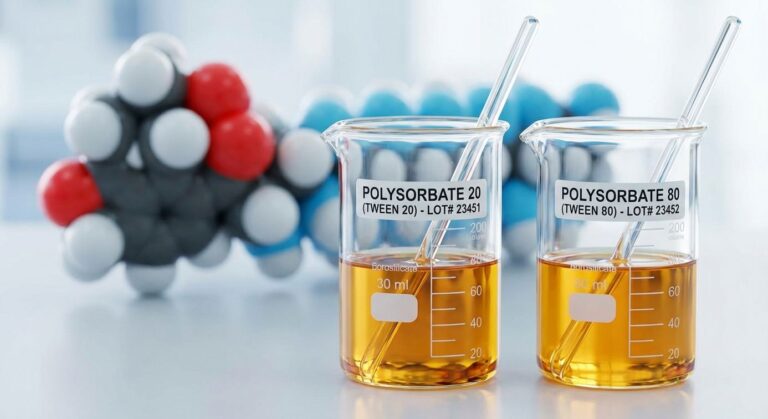
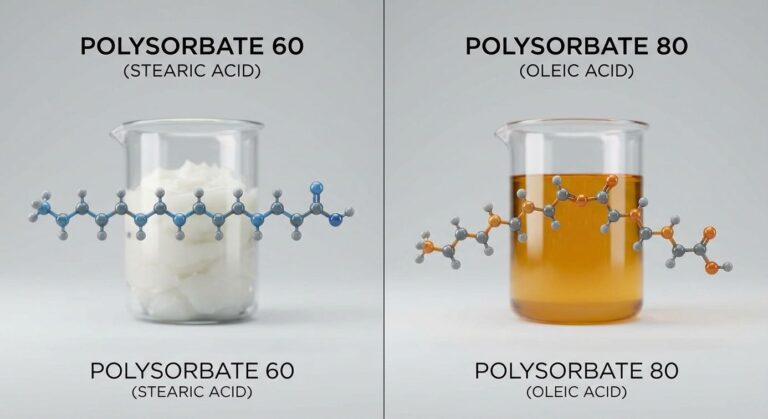
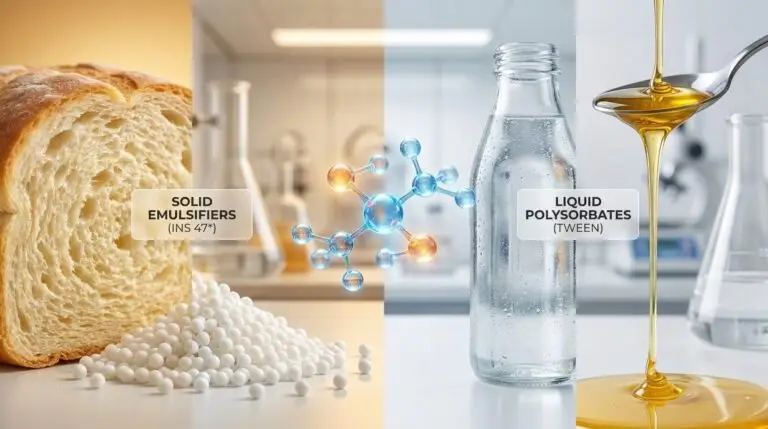
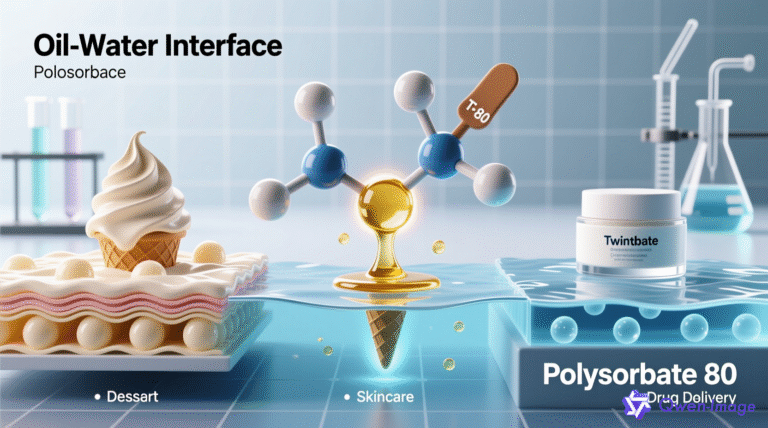
The flagship Polysorbate Family Comparison maps all four polysorbate variants (20, 40, 60, 80) side by side, detailing how fatty acid chain length and saturation drive differences in HLB, solubility, appearance, and best-use scenarios. Product-specific pairings tackle the most common formulation dilemmas: Polysorbate 20 vs. 80 (when to choose lauric over oleic for solubilization), Polysorbate 60 vs. 80 (saturated stearic versus unsaturated oleic for aeration and heat stability), and Span 80 vs. polysorbate 80 (the foundational low-HLB/high-HLB partnership that underpins the Span-polysorbate blending system).
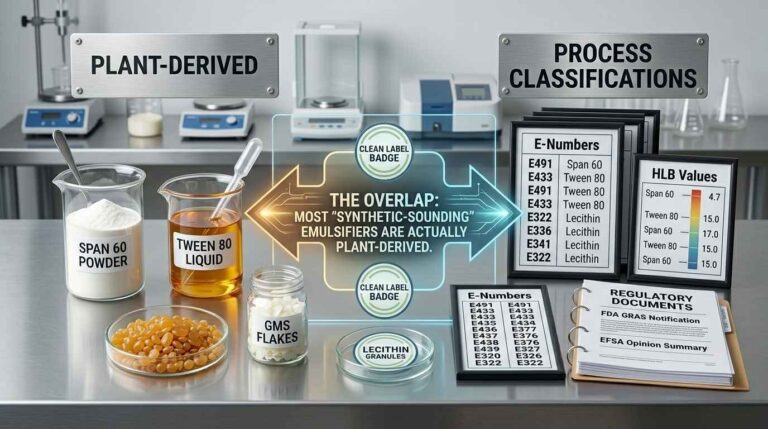
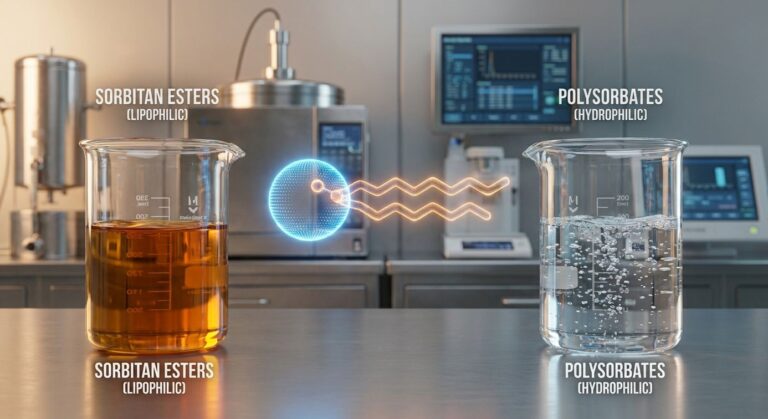
Broader cross-category comparisons examine Sorbitan Esters vs. Polysorbates as complete emulsifier classes, Span 60 vs. Span 65 for applications where tristearate’s higher melting point matters, and INS 471 (mono- and diglycerides) versus the Span-polysorbate system—a critical comparison for formulators evaluating cost, regulatory simplicity, and performance across bakery, dairy, and sauce applications. Each article includes decision criteria tables, HLB comparisons, and practical substitution guidance.