Category: Sorbitan Esters
Insights on food emulsifiers—applications, functions, and benefits to improve stability, texture, and quality across industries.
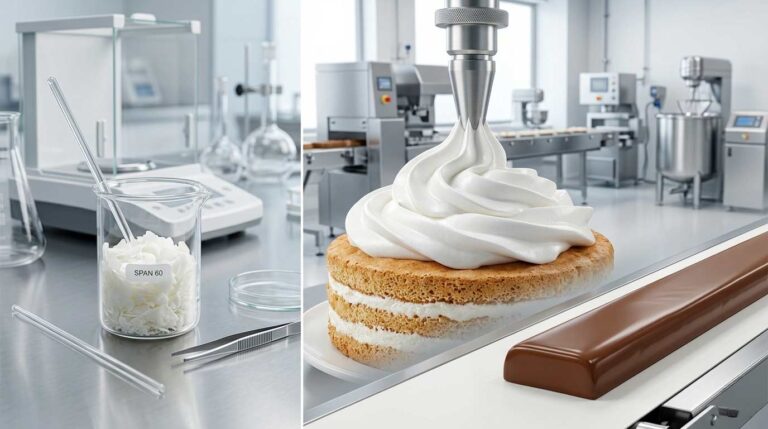
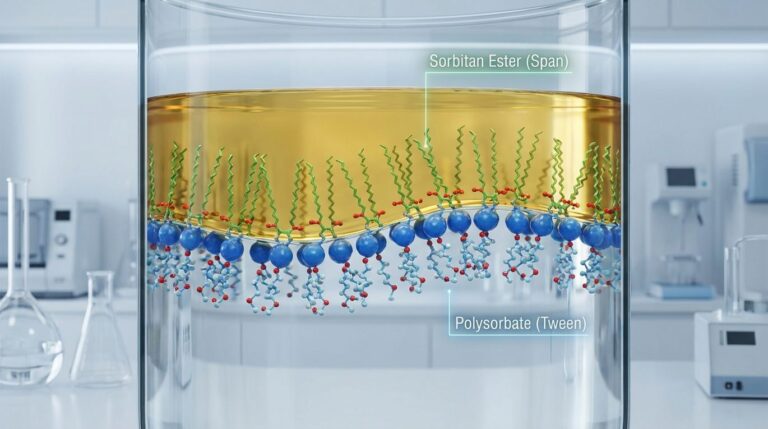
Sorbitan Esters—commercially known as the Span series—are non-ionic, lipophilic surfactants formed by esterifying sorbitol (a plant-derived sugar alcohol) with fatty acids. With low HLB values ranging from 1.6 to 8.6, they are the industry standard for water-in-oil (W/O) emulsions, crystal modification, and anti-bloom applications across food, cosmetics, pharmaceuticals, and industrial sectors. This category provides complete technical coverage of the Span family, from molecular structure to plant-scale formulation.
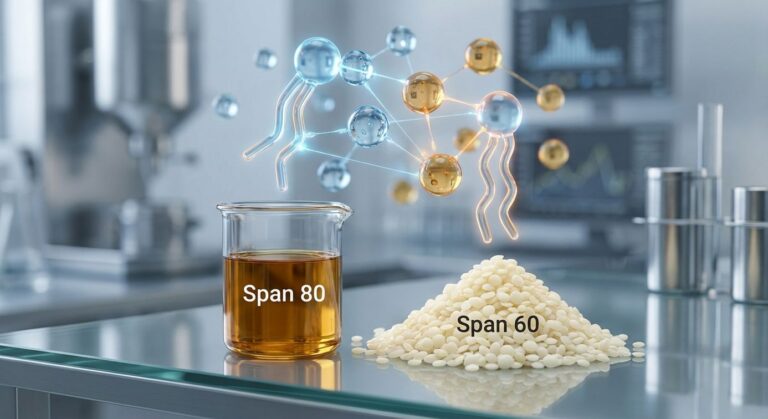
The pillar selection guide walks through the entire Span series—Span 20, 40, 60, 65, 80, and 85—matching each ester to its optimal application based on fatty acid chain length, physical form (liquid to waxy flakes), and emulsification behavior. The Food Grade Guide (E491–E495) covers regulatory status, dosage limits, and formulation strategies for margarine, ice cream, bakery, and confectionery. The Technical, Manufacturing & Safety Guide provides deep coverage of production processes, quality control parameters, and safety data.
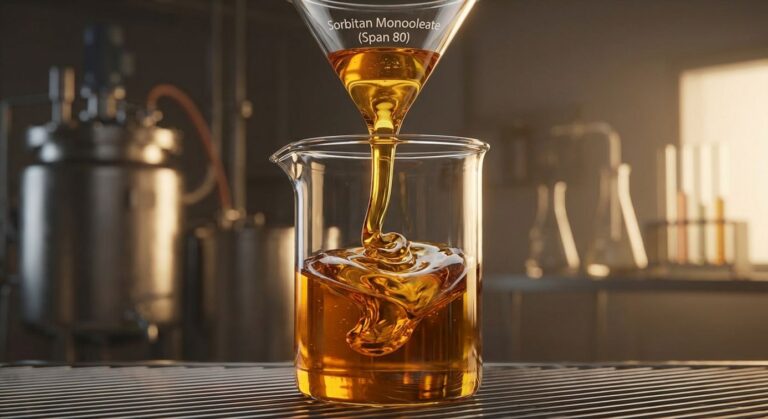
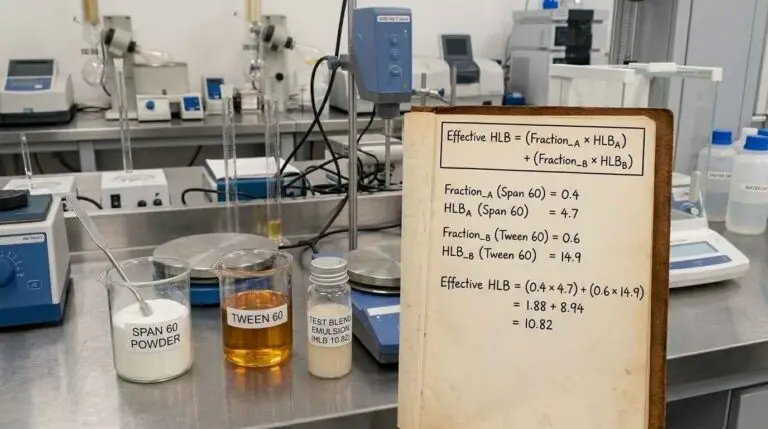
Product-specific deep-dives examine Sorbitan Monostearate (Span 60, E491)—chemical properties, molecular mechanics, and food application limits—and Sorbitan Monooleate (Span 80), a liquid ester widely used in industrial lubricants, dispersions, and personal care. The Cosmetic Emulsifiers Guide focuses on sensory performance, cold-process emulsification, and pigment wetting, while the Formulation Guide delivers practical HLB calculations, solubility tables, and viscosity data for blending Spans with polysorbate to achieve precise emulsion targets.