Category: Polysorbate Emulsifiers
Insights on food emulsifiers—applications, functions, and benefits to improve stability, texture, and quality across industries.
Browse by Topics
Polysorbate Emulsifiers: Essential Stabilizers for Modern Food Formulations
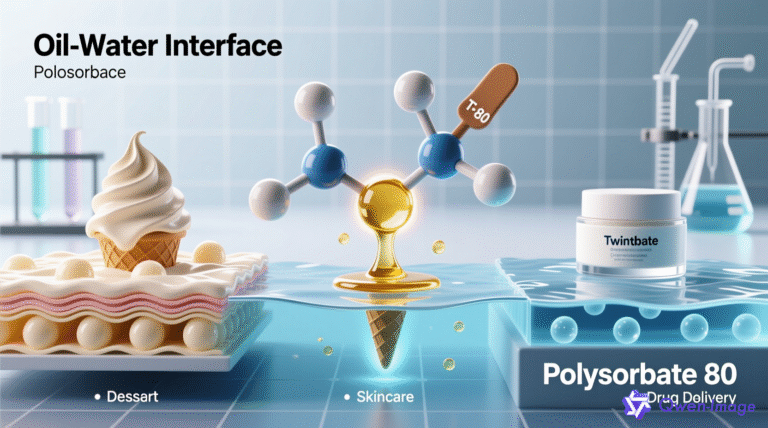
In the dynamic world of food science, Polysorbate emulsifiers—such as Polysorbate 20, 40, 60, and 80 (also known as Tween 20, 40, 60, and 80)—stand as cornerstone non-ionic surfactants that bridge oil and water, ensuring product stability, texture, and shelf life. Derived from sorbitol and plant-based fatty acids like lauric (C12 for Polysorbate 20), palmitic (C16 for 40), stearic (C18 for 60), and oleic (C18:1 for 80) acids, these versatile additives excel in oil-in-water (O/W) emulsions. With HLB values ranging from 14.9 to 16.7, they lower interfacial tension, form micelles for solubilizing flavors and essential oils, and prevent separation in everything from ice cream and sauces to baked goods and condiments. Their semi-synthetic nature, involving ethoxylation for enhanced hydrophilicity, makes them indispensable for manufacturers seeking consistent, high-performance formulations without compromising on clarity or mouthfeel.
This category delves into their physicochemical profiles, including solubility in water and ethanol, critical micelle concentrations (CMC) as low as 0.06 mM for Polysorbate 20, and specifications like acid value and saponification value, which ensure batch-to-batch reliability. Key themes include functional roles in texture enhancement—such as Polysorbate 80’s ice crystal control in frozen desserts or Polysorbate 60’s volume boost in baking—alongside comparisons highlighting Polysorbate 20’s superiority for light, clear solubilization versus Polysorbate 80’s strength in heavy-fat systems. Safety is paramount: FDA GRAS-listed and EU-approved as E432-E435 with ADI up to 25 mg/kg body weight, they offer vegan, gluten-free, Halal, and Kosher options from plant sources, though modern research on gut microbiome impacts underscores the need for low-dose precision. For formulators, these insights guide selecting the right HLB-matched emulsifier to optimize stability, reduce oxidation, and meet clean-label demands, ultimately streamlining production and enhancing consumer appeal.
Explore our detailed guides below to master Polysorbate applications tailored to your needs.