



Tag: Span Emulsifiers
Insights on food emulsifiers—applications, functions, and benefits to improve stability, texture, and quality across industries.
Browse by Topics
Discover insights into sorbitan esters, polysorbates, and other food emulsifiers. Our blog shares technical knowledge, industry applications, and practical guidance to help food manufacturers and formulators understand ingredient functions and optimize product performance. From bakery and dairy to beverages and sauces, explore how emulsifiers improve stability, texture, and shelf life. Stay updated with trends, case studies, and expert perspectives from the food additive industry.
Explore the definitive technical guide on Sorbitan Monostearate (Span 60). Learn about its chemical synergy with polysorbates, industrial food applications, and strict FDA regulatory dosage limits.
Discover the ultimate R&D guide to Sorbitan Monostearate (E491). Master its HLB value, emulsification mechanics, and dosage limits for bakery, yeast, and dairy.
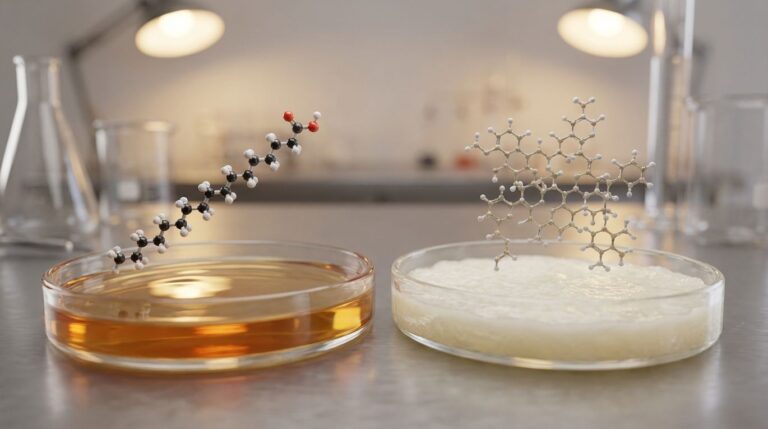
A comprehensive guide to Sorbitan Esters (Span 20, 60, 80). Explore their chemistry, compare Span vs. Polysorbates, and discover applications in food, cosmetics, and industry.
Explore the future of green chemistry with bio-based sorbitan esters. Learn about sustainable production, renewable feedstocks, and eco-friendly applications.
Discover the benefits of Sorbitan Esters (Span Series) in cosmetic formulations. Learn about HLB balance, non-ionic stability, and cold-process emulsification.
Discover the technical properties, HLB ranges, and food applications of Sorbitan Esters (E491-E495). Source high-purity Span series additives for your formulation.
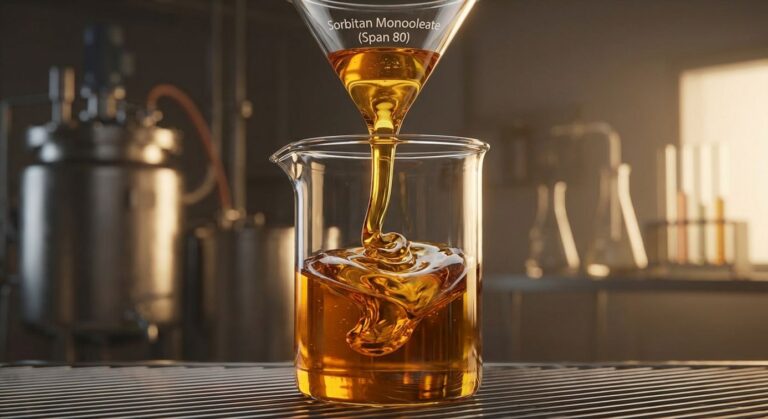
High-purity Sorbitan Monooleate (Span 80) for food, cosmetic, and industrial use. Explore HLB values, E494 compliance, and procurement options. Request a quote today.
Compare Sorbitan Monostearate (Span 60) and Tristearate (Span 65). Learn about HLB gaps, solubility profiles, and industry applications from food to cosmetics.
The ultimate guide to Sorbitan Esters (Span 20, 60, 80). Explore the manufacturing process, HLB values, industrial applications (Food/Cosmetic), and Safety Data Sheet (SDS) protocols.
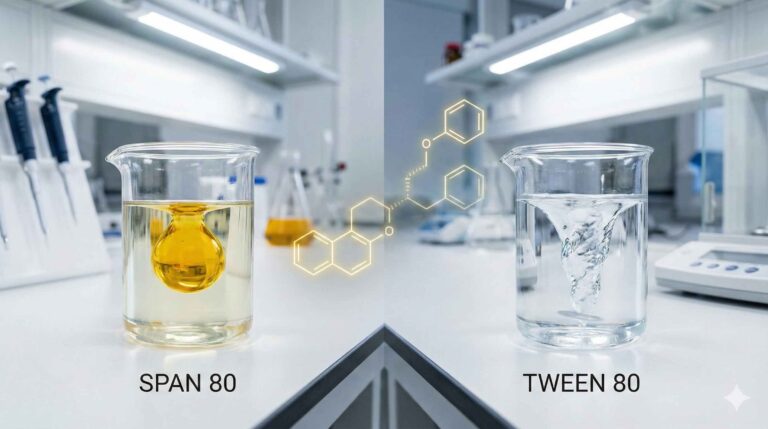
While both originate from sorbitan, Span 80 and Tween 80 serve opposite functions. Discover the key differences in chemical structure, HLB values, and the molecular mechanisms that determine their solubility
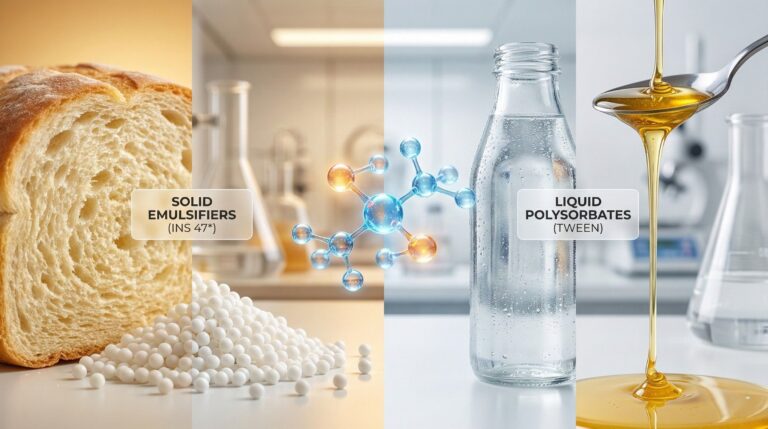
Struggling with beverage clarity or sauce separation? Discover why moving beyond INS 471 to Span & Tween (INS 43x/49x) is the key to stable liquid formulations.
Food emulsifiers are compounds that help mix two or more immiscible components—such as oil and water—into a stable emulsion. They play an essential role in maintaining the physical stability of food, enhancing texture and flavor, simplifying food processing, and extending shelf life.
