

Tag: Emulsification

Insights on food emulsifiers—applications, functions, and benefits to improve stability, texture, and quality across industries.

Emulsification Solutions: Span and Tween Surfactants for Superior Formulation Stability
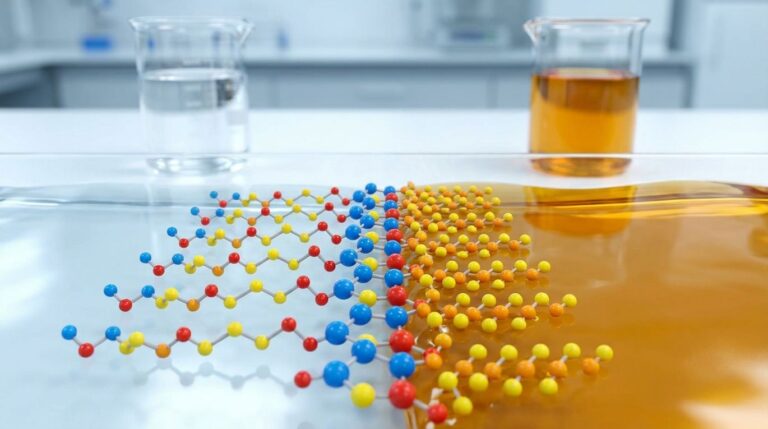
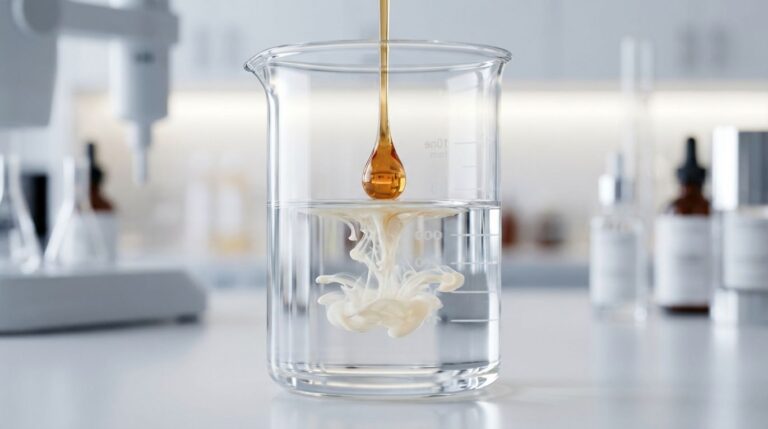
In the competitive landscape of B2B chemical supply, effective emulsification is pivotal for creating stable oil-in-water (O/W) and water-in-oil (W/O) systems across food, cosmetics, and industrial applications. Our Span (sorbitan esters) and Tween (polysorbates) series deliver unmatched performance, leveraging the Hydrophilic-Lipophilic Balance (HLB) system to optimize emulsion integrity, shelf life, and sensory attributes.

Technical Insights and Applications
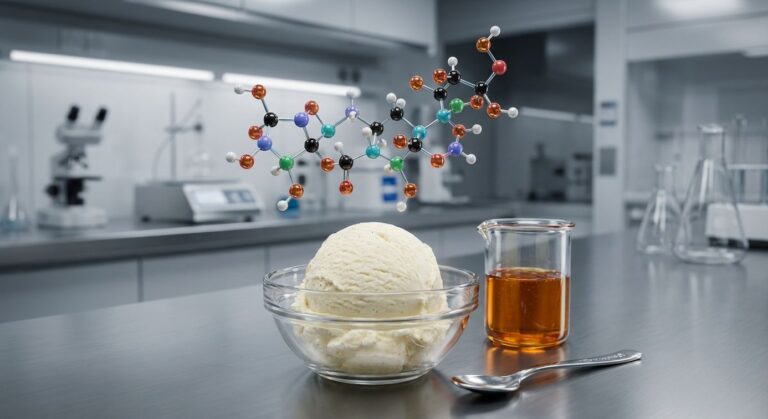
Derived from sorbitol and fatty acids, Span surfactants exhibit low HLB values (e.g., Span 80: HLB 4.3 for W/O emulsions and wetting) while Tween variants offer high HLB (e.g., Tween 80: HLB 15.0 for O/W stabilization and solubilization). Blends calculated via HLB_blend = (Wa × HLBa) + (Wb × HLBb) enhance interfacial films, preventing coalescence in formulations like ice cream (Tween 80 for overrun control) and lotions (Tween 20 for essential oil dispersion).

Food & Beverage: E432-E436 compliant; stabilizes dressings, improves bakery texture (Span 60 as dough conditioner).
Cosmetics: Non-comedogenic; enables clear oil cleansers and vegan-friendly emulsions.
Industrial: REACH-registered; aids pesticide and coating dispersion with low CMC for efficiency.

All products meet FDA, EU, RSPO, and Kosher/Halal standards, ensuring regulatory compliance and sustainability.

Partner with us for high-purity, batch-consistent emulsifiers tailored to your needs. Contact our technical team for custom HLB matching and samples today.

/

February 21, 2026

Discover the definitive deep-dive into Sorbitan Esters (Span) and Polysorbates (Tween). This master guide covers HLB systems, synergistic blending, and stability solutions tailored for food, cosmetic, and industrial formulators, while ensuring strict global regulatory compliance.

/

February 13, 2026

Get a complete Polysorbate 20 TDS overview. Find key specs, HLB value, solubility, safety, and vegan status for your formulation. Source high-purity Tween 20.

/

February 13, 2026

Unlock premium ice cream texture with Polysorbate 80. Our guide covers fat destabilization, overrun control, and synergistic blends for formulators.

/

February 13, 2026

Learn to formulate high-performance oil cleansers with Polysorbate 80. Our guide covers HLB science, recipes, and safety for B2B cosmetic development.

/

February 13, 2026

Technical guide to Polysorbate 80 (E433). Explore specs, uses in food & pharma, and regulatory data. Source high-purity emulsifiers from foodemul.com.

/

February 11, 2026

Discover the top polysorbate 60 substitutes. Compare natural & synthetic alternatives like lecithin & sorbitan esters for your clean label food formulations.

/

February 11, 2026

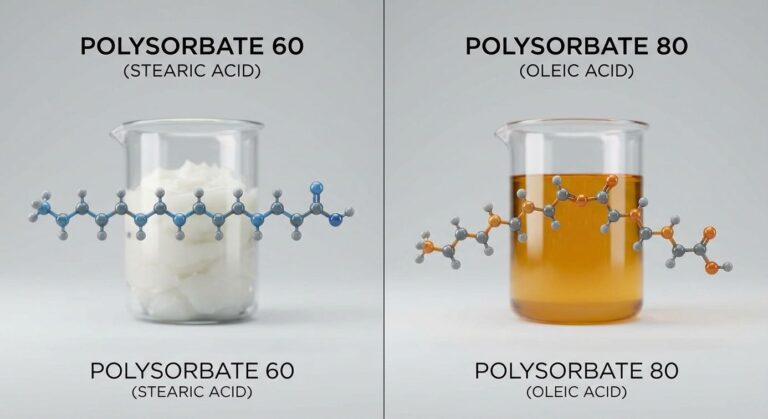
Compare Polysorbate 60 vs 80. Learn the key differences in HLB, solubility, and structure to choose the right emulsifier for your food or cosmetic product.

/

February 11, 2026

Discover Polysorbate 60 (Tween 60), the essential O/W emulsifier for stable skin care. Our guide covers HLB value, applications, and safety for formulators.

/

February 10, 2026

A comprehensive guide to Sorbitan Esters (Span 20, 60, 80). Explore their chemistry, compare Span vs. Polysorbates, and discover applications in food, cosmetics, and industry.

/

February 10, 2026

The ultimate formulation guide for Sorbitan Esters (Span Series). Master HLB calculations, solubility profiles, viscosity, and industrial applications from textiles to agrochemicals.

/

January 11, 2026

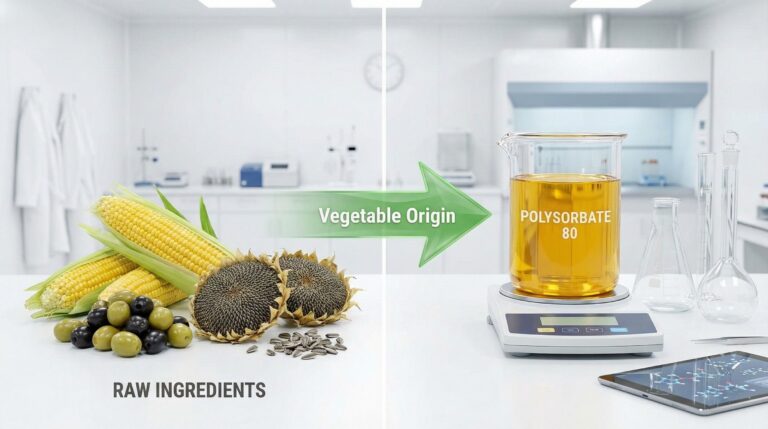
Compare natural Polysorbate 80 substitutes like Lecithin and Gum Arabic. Learn why Vegetable-Based Polysorbate 80 is the best “clean label” compromise. Contact FoodEmul today.

/

January 9, 2026

Polysorbate 80 is widely used as an emulsifier and solubilizer to improve texture, stability, and consistency in food and cosmetic formulations. Learn why manufacturers rely on it.