
Insights on food emulsifiers—applications, functions, and benefits to improve stability, texture, and quality across industries.
HLB Value: Optimizing Emulsion Stability in Industrial Formulations
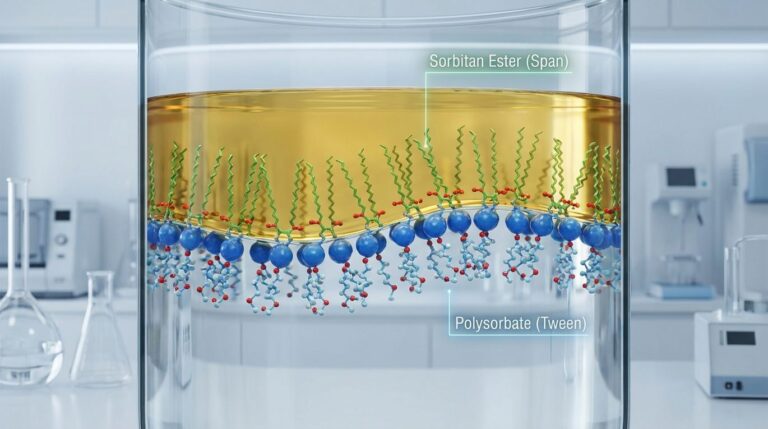
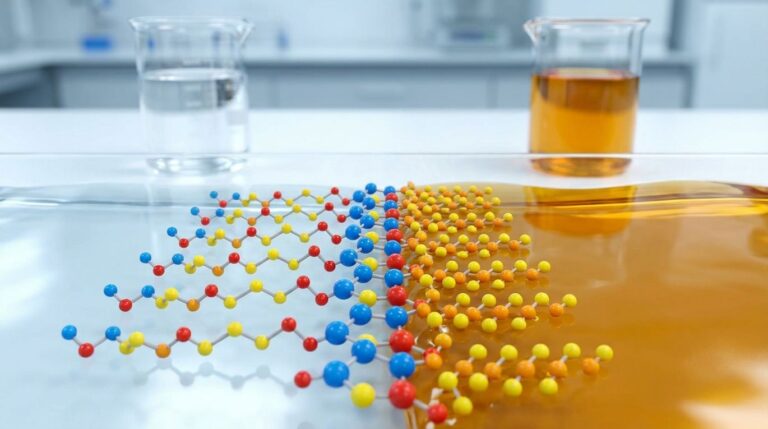
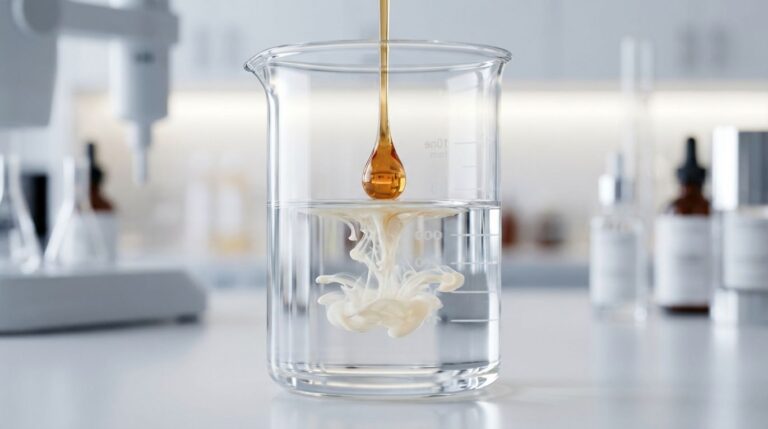
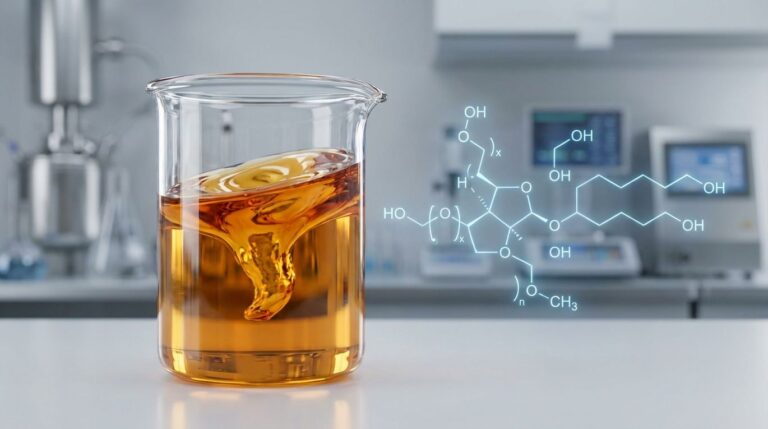
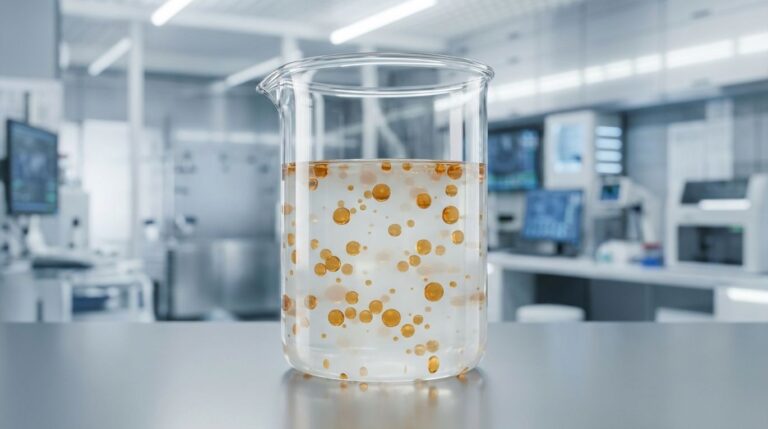
In the competitive landscape of chemical supply for food, cosmetics, and pharmaceuticals, the HLB Value (Hydrophilic-Lipophilic Balance) serves as a cornerstone metric for selecting surfactants like Sorbitan Esters (Spans) and Polysorbates (Tweens). Ranging from 0 to 20, low HLB values (e.g., Span 60 at 4.7) favor water-in-oil (W/O) emulsions for bakery aeration and chocolate crystallization, while high HLB values (e.g., Tween 80 at 15.0) excel in oil-in-water (O/W) systems for ice cream overrun and clear beverages. This balance ensures phase compatibility, preventing separation and enhancing shelf-life, with regulatory compliance under E491-E495 and E432-E436.Key Applications and Properties
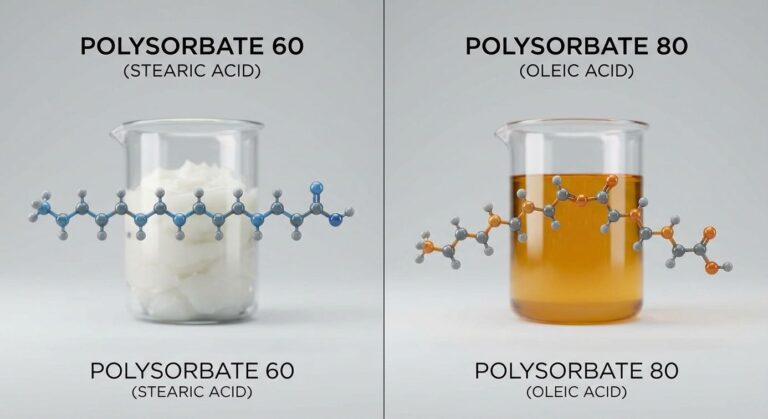
Food Industry: Span 60 (HLB 4.7) stabilizes dough rheology; Tween 60 (HLB 14.9) improves texture in whipped toppings.
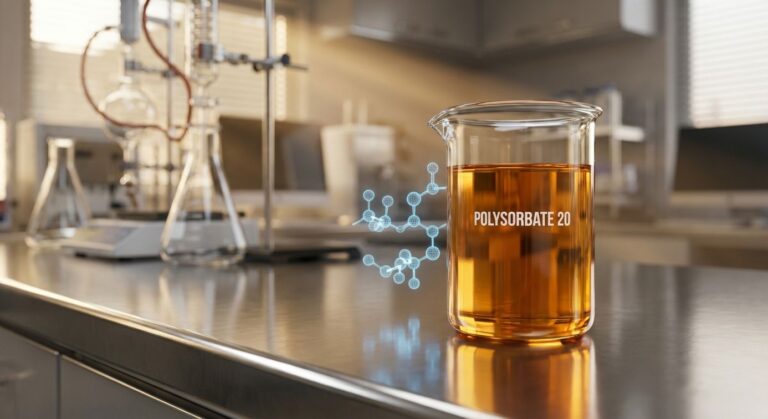
Cosmetics: Tween 20 (HLB 16.7) solubilizes essential oils; blends with Span 80 (HLB 4.3) for stable lotions.
Industrial: Synergistic Span-Tween mixes adjust required HLB for agrochemical wetting and paint dispersion; soluble in water/ethanol, insoluble in oils for precise control.
Leverage HLB Value calculations for formulation synergy, reducing dosage while boosting stability. Contact FoodEmul.com for custom blends, COAs, and technical support to elevate your R&D efficiency.

Looking for TDS, COA, or pricing? Fill out the form below, and our sales team will respond within 24 hours.