Tag: Food Emulsifiers
Insights on food emulsifiers—applications, functions, and benefits to improve stability, texture, and quality across industries.
Browse by Topics
Food Emulsifiers: Essential Stabilizers for B2B Food Production
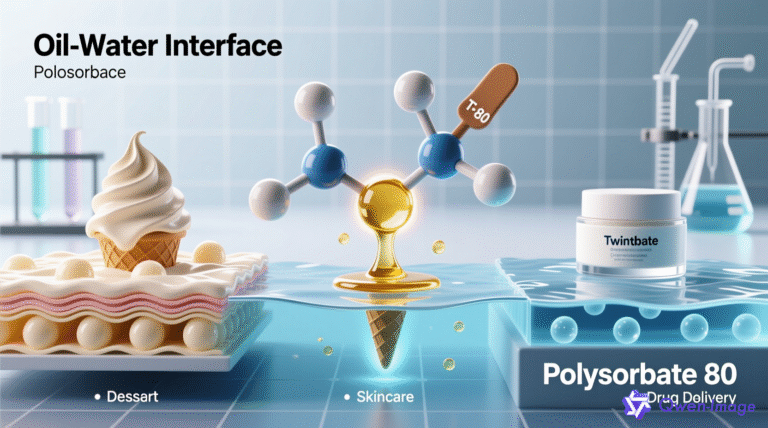
Food Emulsifiers represent a cornerstone of modern industrial food formulation, delivering precise control over emulsions to optimize texture, stability, and sensory attributes. As non-ionic surfactants like the Span and Tween series, they bridge oil-water interfaces, preventing phase separation and enhancing shelf life in high-volume manufacturing. With regulatory approvals as GRAS by FDA and E-numbers (e.g., E491, E433) by EFSA, these versatile agents ensure compliance across global markets, including vegan, Halal, and Kosher certifications from plant-derived sources.Technical Properties and Applications
Sorbitan esters (e.g., Sorbitan Monostearate, HLB 4.7) excel in water-in-oil (W/O) systems, promoting α-crystalline stabilization in bakery dough rheology (0.35-0.50% usage) and yeast protection during spray-drying. Polysorbates (e.g., Polysorbate 80, HLB 15.0) drive oil-in-water (O/W) emulsions, enabling controlled fat destabilization in ice cream for superior overrun and meltdown resistance (0.1-0.3% dosage). Key benefits include reduced interfacial tension, synergy with mono/diglycerides, and solubility in ethanol/oils, while insoluble forms disperse in hot water. Applications span confectionery (fat bloom prevention), dairy (margarine smoothness), and condiments (flavor solubilization), all at ADI limits of 25 mg/kg body weight.
Stability Insights: Prevent coalescence under high shear; extend product viability via micelle formation.
Safety Profile: Metabolized as sorbitol and fatty acids; low toxicity with rigorous purity standards (e.g., peroxide value control).
Partner with us for tailored Food Emulsifiers solutions, technical data sheets, and bulk procurement to elevate your formulations. Contact our experts today.