






BLOG
Insights on food emulsifiers—applications, functions, and benefits to improve stability, texture, and quality across industries.
Home / Blog
Discover insights into sorbitan esters, polysorbates, and other food emulsifiers. Our blog shares technical knowledge, industry applications, and practical guidance to help food manufacturers and formulators understand ingredient functions and optimize product performance. From bakery and dairy to beverages and sauces, explore how emulsifiers improve stability, texture, and shelf life. Stay updated with trends, case studies, and expert perspectives from the food additive industry.
Check the holder, product scope, manufacturing site and validity of halal and kosher certificates before approving food emulsifier suppliers.
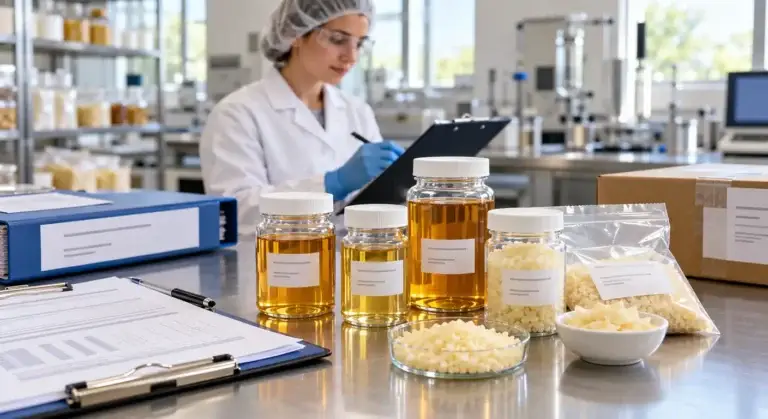
Check storage conditions, batch dates, packaging and remaining shelf life before approving a polysorbate 80 shipment.
Qualify a food emulsifier supplier by verifying manufacturing roles, documents, batch consistency, traceability, and commercial records.
Use this food emulsifier RFQ checklist to specify grade, application, quantity, packaging, destination, Incoterm, documents, and sample needs.
Learn what food emulsifier TDS, COA, and SDS documents can and cannot prove, and how procurement and QA teams should review them together.
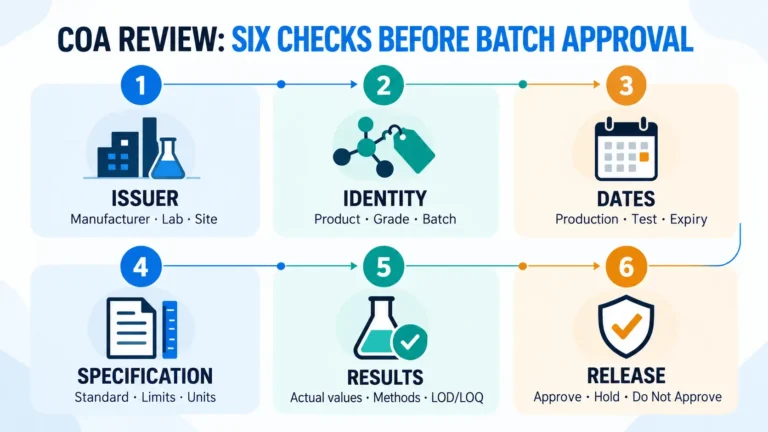
Food emulsifier COA checklist: use these 12 verification points to check product identity, lot, dates, specifications, results, units, methods, and approval.
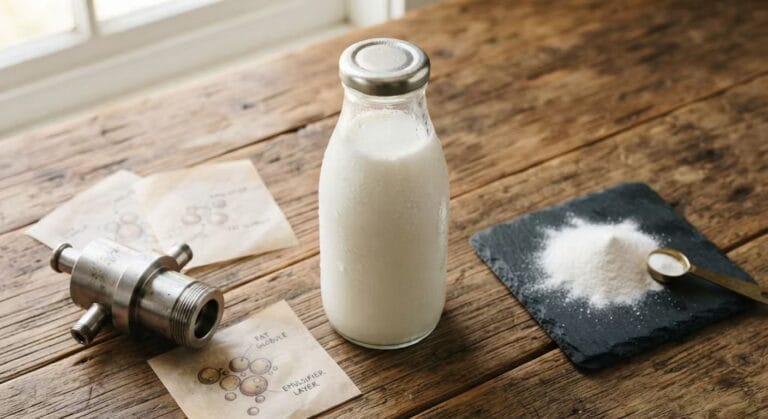
Pure milk doesn’t separate by accident. Here’s how GMS, Span 60, and polysorbate 80 work together at HLB 9.0 to keep milk fat evenly dispersed — from homogenization to the last pour.
How GMS, SSL, lactic acid esters, PGMS, and PGFE stabilize coffee whiteners and whipped toppings. Formulation data, HLB targets, and freeze-thaw strategies from food emulsifier science.
When Milk Gets Complicated A bottle of plain milk is one thing. Add cocoa powder, fruit juice, or reconstitute it from powder and fat, and suddenly you have a different…
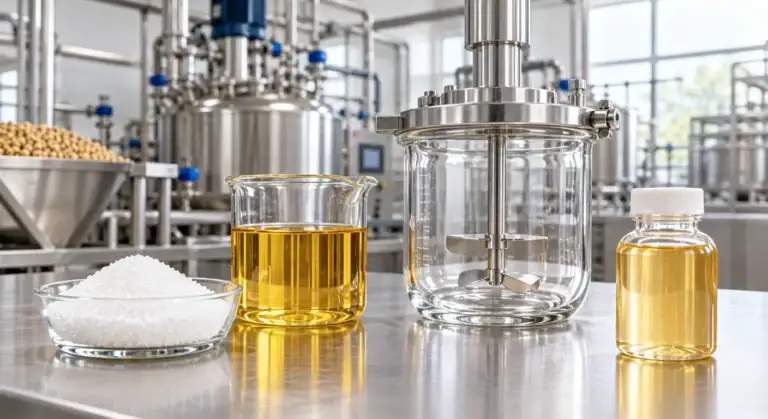
How corn sugar becomes sorbitol, sorbitan, Span emulsifiers, and polysorbates — a simple step-by-step chemistry guide.
How to use polysorbate 20, 60, and 80 in skincare and hair care formulations. A practical guide covering solubilization ratios, CIR safety data, detergent comparisons, and a formulator’s decision table — from micellar waters to oil cleansers.
A technical guide to polysorbate 80 and polysorbate 20 as solubilizers for essential oils, flavor compounds, and fragrances. Covers CMC micelle chemistry, exclusive solubilization data for 7 essential oils, mixing protocols, troubleshooting, and regulatory standards.
