

Tag: HLB Value

Insights on food emulsifiers—applications, functions, and benefits to improve stability, texture, and quality across industries.

HLB Value: Optimizing Emulsion Stability in Industrial Formulations
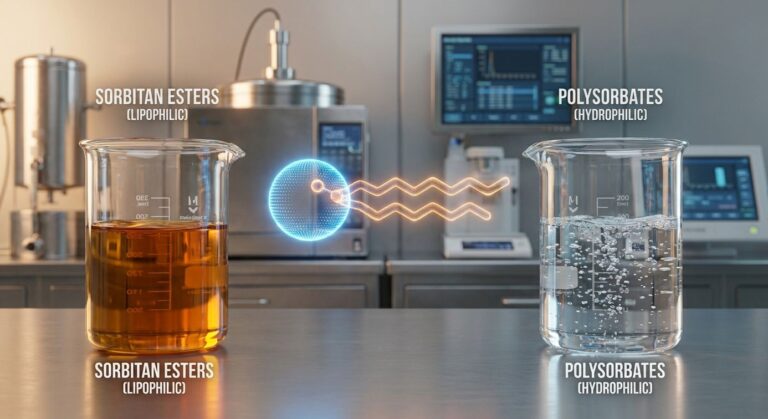
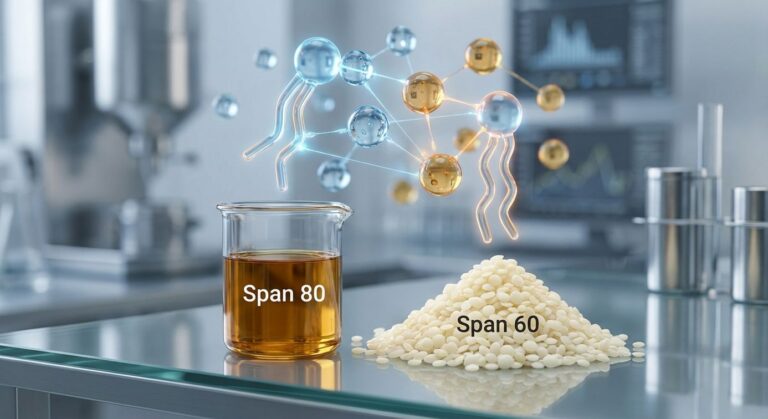
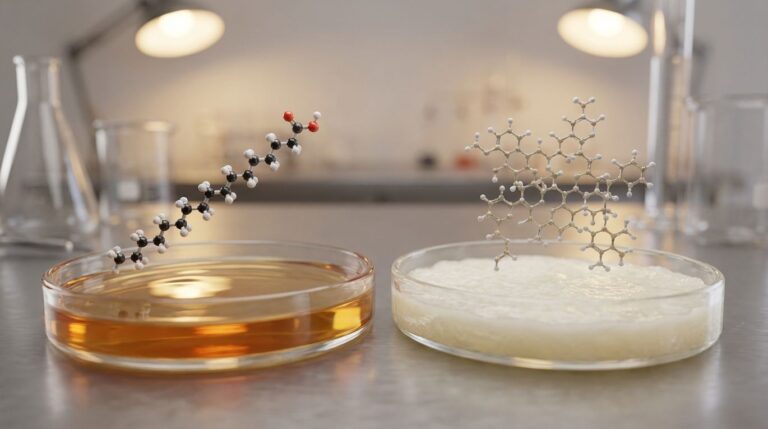
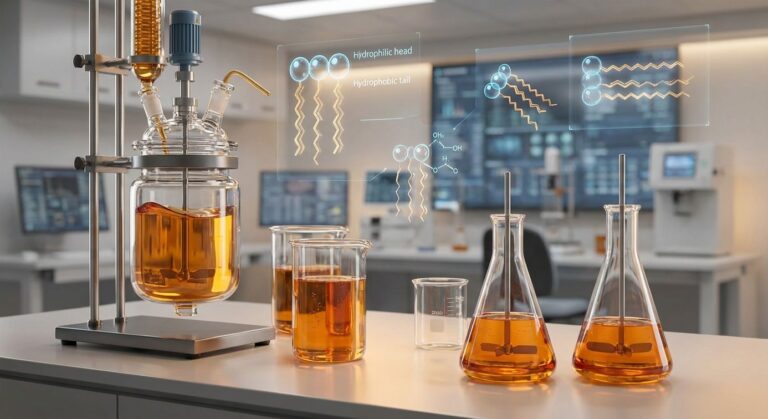
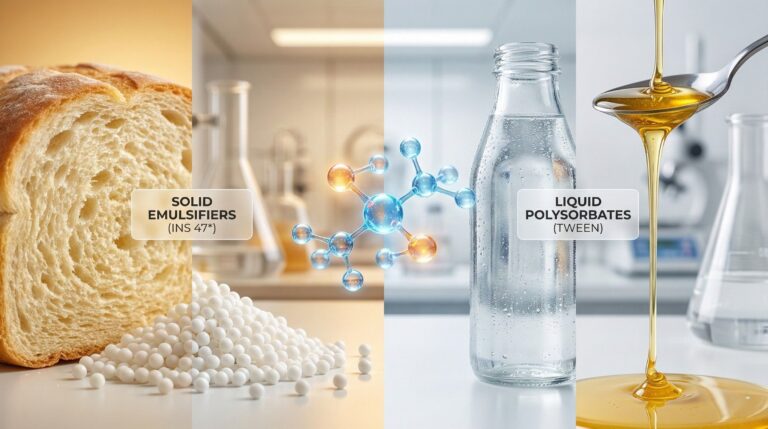
In the competitive landscape of chemical supply for food, cosmetics, and pharmaceuticals, the HLB Value (Hydrophilic-Lipophilic Balance) serves as a cornerstone metric for selecting surfactants like Sorbitan Esters (Spans) and Polysorbates (Tweens). Ranging from 0 to 20, low HLB values (e.g., Span 60 at 4.7) favor water-in-oil (W/O) emulsions for bakery aeration and chocolate crystallization, while high HLB values (e.g., Tween 80 at 15.0) excel in oil-in-water (O/W) systems for ice cream overrun and clear beverages. This balance ensures phase compatibility, preventing separation and enhancing shelf-life, with regulatory compliance under E491-E495 and E432-E436.Key Applications and Properties

Food Industry: Span 60 (HLB 4.7) stabilizes dough rheology; Tween 60 (HLB 14.9) improves texture in whipped toppings.
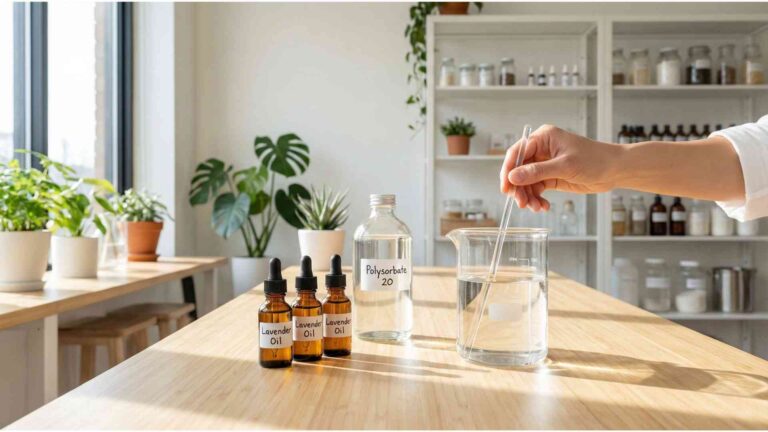
Cosmetics: Tween 20 (HLB 16.7) solubilizes essential oils; blends with Span 80 (HLB 4.3) for stable lotions.
Industrial: Synergistic Span-Tween mixes adjust required HLB for agrochemical wetting and paint dispersion; soluble in water/ethanol, insoluble in oils for precise control.

Leverage HLB Value calculations for formulation synergy, reducing dosage while boosting stability. Contact FoodEmul.com for custom blends, COAs, and technical support to elevate your R&D efficiency.

/

February 10, 2026

Compare Sorbitan Esters (Spans) and Polysorbates (Tweens). Learn about HLB values, chemical structures, and synergistic effects for food and cosmetic formulas.

/

February 10, 2026

The ultimate formulation guide for Sorbitan Esters (Span Series). Master HLB calculations, solubility profiles, viscosity, and industrial applications from textiles to agrochemicals.

/

February 10, 2026

Discover the benefits of Sorbitan Esters (Span Series) in cosmetic formulations. Learn about HLB balance, non-ionic stability, and cold-process emulsification.

/

February 10, 2026

Discover the technical properties, HLB ranges, and food applications of Sorbitan Esters (E491-E495). Source high-purity Span series additives for your formulation.

/

February 10, 2026

Compare Sorbitan Monostearate (Span 60) and Tristearate (Span 65). Learn about HLB gaps, solubility profiles, and industry applications from food to cosmetics.

/

February 9, 2026

The ultimate guide to Sorbitan Esters (Span 20, 60, 80). Explore the manufacturing process, HLB values, industrial applications (Food/Cosmetic), and Safety Data Sheet (SDS) protocols.

/

February 6, 2026

Discover a complete list of foods with Polysorbate 80. Learn about its role in ice cream, safety for gut health, and if it’s vegan-friendly.

/

February 5, 2026

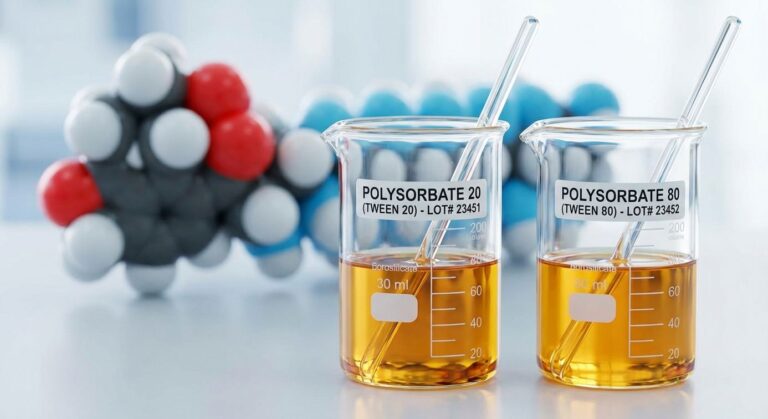
Compare Polysorbate 20 vs 80. Learn the differences in HLB values, chemical structure (Lauric vs Oleic acid), and when to use each for solubilization.

/

January 20, 2026

Master the “Golden Ratios” for Polysorbate 20. Learn how to solubilize essential oils for crystal-clear sprays and toners. Step-by-step mixing guide included.

/

January 14, 2026

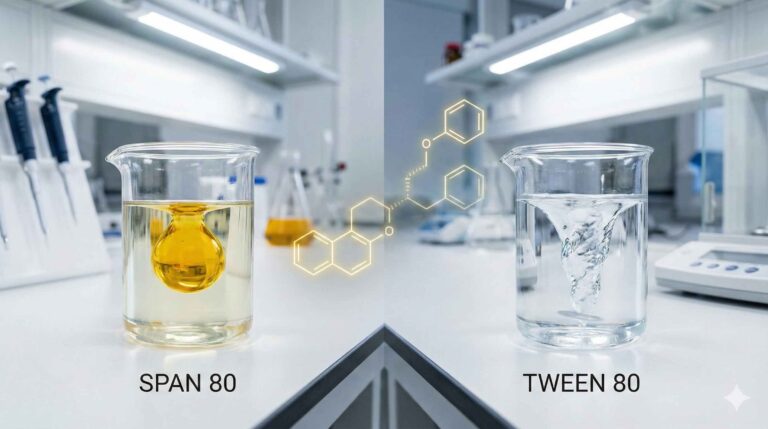
While both originate from sorbitan, Span 80 and Tween 80 serve opposite functions. Discover the key differences in chemical structure, HLB values, and the molecular mechanisms that determine their solubility

/

January 12, 2026

Struggling with beverage clarity or sauce separation? Discover why moving beyond INS 471 to Span & Tween (INS 43x/49x) is the key to stable liquid formulations.

/

January 11, 2026

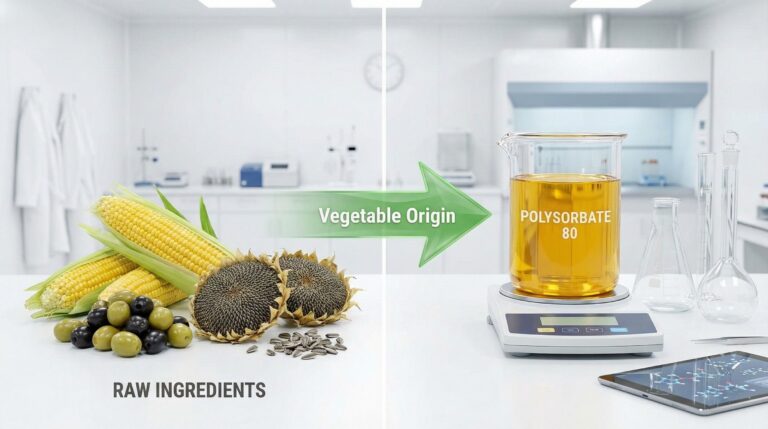
Compare natural Polysorbate 80 substitutes like Lecithin and Gum Arabic. Learn why Vegetable-Based Polysorbate 80 is the best “clean label” compromise. Contact FoodEmul today.