
The food emulsifier market is shifting faster than most formulators realize. Clean-label pressure, plant-based growth, and regulatory tightening in Europe and Asia are reshaping which emulsifiers end up on ingredient statements. At FoodEmul, we track these trends because they directly affect what our customers can formulate and sell. This guide covers the key market forces shaping food emulsifiers in 2026 — from clean-label alternatives to regional regulatory divergence.
Global Market at a Glance
The food emulsifiers market reached approximately USD 4.29 billion in 2026, with forecasts projecting growth to USD 5.55 billion by 2031 at a CAGR of 5.31%. Several independent forecasts converge on the same growth drivers:
- Surging demand for processed and convenience foods globally
- Consumer preference for clean-label and recognizable ingredients
- Rapid urbanization and income growth in Asia, Africa, and Latin America
- Explosive expansion of plant-based meat and dairy alternatives
- Technical requirements for improved texture and extended shelf life
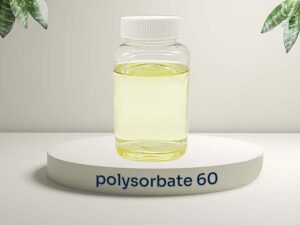
By product type, mono- and diglycerides (E471) dominate at 46.9% revenue share. Lecithin (E322) is the fastest-growing category — driven by clean-label and plant-based positioning. Sorbitan esters (Span, E491–E495) and polysorbates (Polysorbate, E432–E435) hold specialized but stable positions in baking, ice cream, and beverage applications where their technical performance is unmatched.
If you are new to the food emulsifier landscape, start with our guide to food emulsifier functions and applications.
Trend 1: The Clean-Label Acceleration
The biggest structural shift in the food emulsifier market is the migration from synthetic-sounding emulsifiers to recognizable, naturally positioned alternatives. This trend is no longer marginal — it is mainstream.
By the numbers:
– Nearly 52% of food and beverage products in Europe are already clean-labeled, projected to reach 70% by end of 2026 (CBI.EU)
– 87% of European manufacturers have already brought clean-label products to market
– The global clean-label emulsifiers segment is growing at 7.7% CAGR — nearly 1.5× the overall market rate
What it means for emulsifier selection:
| Consumer Demand | Old Choice | Clean-Label Alternative |
|---|---|---|
| No synthetic-sounding names | DATEM, polysorbates in some applications | Sunflower lecithin, soy lecithin, hydrolyzed lecithin |
| Plant-derived ingredients | Animal-derived or unspecified-origin E471 | Vegetable-sourced, non-GMO documented DMG/GMS |
| Allergen-free | Soy lecithin (allergenic) | Sunflower lecithin (non-allergen, non-GMO) |
| Fewer E-numbers on label | Multiple single-function emulsifiers | Multifunctional compound blends (fewer total additives) |
Where Span and Polysorbate fit: Span and Polysorbate emulsifiers are plant-derived (vegetable fatty acids + sorbitol) and can carry non-GMO documentation. They are not typically positioned as “clean-label” in the consumer sense, but their plant origin supports “plant-based” and “vegetable-source” claims. Our guide to Span/Polysorbate raw materials covers sourcing documentation.
Trend 2: Plant-Based Foods Are Creating New Emulsifier Demand
The growth of plant-based dairy, meat alternatives, and egg-free bakery is creating entirely new emulsification challenges — and new demand. Plant-based food emulsifiers are projected to grow at a CAGR of 7.9% through the forecast period.
Plant-Based Dairy Alternatives
Oat, almond, soy, and pea-protein beverages each present distinct emulsification challenges: fat separation during storage, foam instability in barista applications, heat stability during UHT processing, and mouthfeel that mimics dairy fat creaminess.
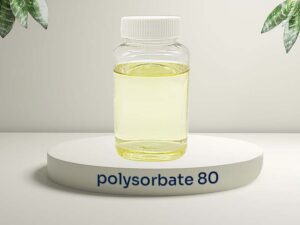
Polysorbate 80 (E433) and Polysorbate 60 (E435), combined with GMS (E471), are widely used in these systems. The Polysorbate component provides the high-HLB O/W stabilization; GMS contributes creaminess and mouthfeel. Our Beverage Emulsifier Systems Guide covers plant-based beverage formulation in detail.
Plant-Based Meat
Replicating the complex fat distribution and thermal behavior of animal muscle tissue is the most intensive emulsifier R&D frontier. Emulsifiers in plant-based meat work alongside protein isolates, hydrocolloids, and binding agents — not as standalone ingredients but as precision components in a multi-ingredient system.
Span 60 (E491) and DMG (E471) are used to structure fat in plant-based meat systems, creating the marbling-like fat distribution and cooking behavior that consumers expect. Our Emulsifier Selection Framework covers selecting emulsifiers for complex food systems.
Sunflower Lecithin: The Fastest-Growing Single Ingredient
Within plant-based emulsifiers, sunflower lecithin stands out. The global de-oiled sunflower lecithin market is projected to grow from USD 205.8 million in 2026 to USD 315.7 million by 2034 (CAGR 5.5%). Sunflower lecithin’s advantages over soy — non-allergen, non-GMO by nature — make it the preferred choice for premium chocolate, infant nutrition, and organic bakery where label scrutiny is highest.
Trend 3: Application Hotspots
Bakery — 30% of All Emulsifier Demand
Bakery remains the single largest application segment. The functionality that emulsifiers provide — dough strengthening, gas retention, anti-staling, crumb softening — cannot be replaced by any single alternative ingredient.
| Function | Key Emulsifiers | Market Driver |
|---|---|---|
| Dough strengthening | DATEM (E472e), SSL (E481) | High-speed bread lines, frozen dough |
| Crumb softening / anti-staling | DMG/GMS (E471) | Packaged bread with 7-21 day shelf life |
| Cake aeration + foam stability | Span 60 + Polysorbate 60 | Industrial sponge cake, Swiss roll |
| Fat reduction | SSL, Span 60 | Premium-positioned lower-fat bakery |
Our Cake Gel guide covers the Span 60/Polysorbate 60 cake system in depth.
Ice Cream & Frozen Desserts
Emulsifiers in ice cream serve a function no other ingredient can replicate: controlled fat destabilization. The Span 80/Polysorbate 80 compound system — covered in our Ice Cream guide — produces the partial coalescence that gives premium ice cream its body, dryness, and melt resistance. With plant-based and low-fat ice creams growing, emulsifier demand in this category is expanding.
Beverage Emulsions
Flavor emulsions, cloud emulsions, and nutritional beverage emulsions all require high-HLB emulsifiers for stable O/W dispersion. Polysorbate 80 and sucrose esters dominate, with the beverage segment driving steady demand for high-purity Polysorbate grades. See our Beverage Emulsifier guide.
Trend 4: Regional Dynamics
North America (38% market share) — Premium & Innovation-Led
The U.S. market is the largest single-country emulsifier market at approximately USD 1.11 billion (2025), growing at 7.2% to reach USD 2.22 billion by 2035. Plant-based emulsifiers already account for 65% of the U.S. market. The USDA has allocated USD 11.3 million toward novel foods research, accelerating plant-based emulsification technology.
Europe — Clean-Label Leadership
The EU food emulsifiers market is projected to reach USD 1.75 billion by 2036, with plant-derived emulsifiers at 55% share. Under EU Regulation 1333/2008, emulsifiers are classified by E-number (E322 lecithin, E471 mono-diglycerides, E491–E495 sorbitan esters, E432–E435 polysorbates). The dominant purchasing factor in Europe is not regulatory restriction but consumer and retailer preference for recognizable, plant-derived ingredients.
Asia-Pacific — The Growth Engine
The Asia-Pacific food emulsifier market is growing at 7.6% CAGR — the fastest of any region. China leads with 7.6% market share, followed by rapid growth in India and Southeast Asia. Bakery and confectionery expansion in India, functional foods and dairy in China, and processed food growth across Southeast Asia are all driving demand.
Trend 5: Technology Innovation
Compound/composite emulsifier systems — Synergistic blends (Span + Polysorbate + GMS, for example) are displacing single-emulsifier formulations. A properly designed compound system can deliver dough strengthening, aeration, and anti-staling in one ingredient, reducing total additive count. Our Compound Emulsifiers guide covers blend design.
Enzymatically modified emulsifiers — Phospholipase-treated lecithin (hydrolyzed lecithin) delivers improved water dispersibility and enhanced O/W emulsification — valuable in plant milks and sauces — without introducing unrecognized ingredients.
Heat-resistant formulations — As retort and UHT processing expands for shelf-stable products, emulsifiers must perform reliably at high temperature without degrading or producing off-flavors.
What This Means for Your Formulation Strategy
-
If you sell in Europe or to premium U.S. retailers: Prioritize lecithin and documented vegetable-source E471 over polysorbates where technically feasible. Sunflower lecithin is the fastest path to clean-label compliance.
-
If you manufacture plant-based foods: You need emulsifier systems, not single emulsifiers. Plant proteins behave differently from dairy and egg proteins — Span/Polysorbate systems provide the HLB coverage and interfacial film strength that plant protein-based products require.
-
If you export to Asia-Pacific: Price-competitive E471 (DMG/GMS) and DATEM/SSL for bakery remain the core volume products. The market is growing fast but remains price-sensitive compared to Europe and North America.
-
Regardless of region: The trend toward fewer, more functional ingredients on the label means compound emulsifier systems are the smart long-term formulation investment.
Market data in this article draws from multiple industry forecasts (2025-2036). For specific emulsifier recommendations by product type, see our Emulsifier Selection Framework. For the science behind emulsifier functionality, start with our guide to food emulsifier functions.
Planning ahead for 2026 compliance? We manufacture Span 60, Polysorbate 80, and the full range with Kosher and MUI Halal certification — reach out for technical guidance.